Moving from New York to Raleigh, NC
Is It Worth It?
Compare housing costs, taxes, schools, weather, traffic, and daily life — before you make the move.
Free 30-minute consultation · English & Russian
Anna Rukhlina · Real Estate Broker · DASH Carolina
Why New Yorkers Are Moving to Raleigh
New York remains one of the largest sources of relocation buyers moving to the Raleigh and Triangle area. The reasons are consistent:
New York vs Raleigh Area: At a Glance
| Category | New York | Raleigh Area |
|---|---|---|
| Home prices | Among the highest in the US | Significantly lower |
| State income tax | Up to 10.9% | 3.99% flat (2026)* |
| NYC city income tax | Up to 3.876% (NYC residents) | None |
| Property tax | Among the highest in the US | ~0.84–0.87% (Wake Co. + city)** |
| Sales tax | 8–8.875% (NYC) | 7.3% (Wake County) |
| Gas | Above national average | Below national average |
| Electricity | Higher than national average | Moderate — typical for the Southeast |
| Childcare (full-time) | Among the most expensive in the US | Significantly lower |
| Average commute | 45–90 min (NYC) / 30–60 min (suburbs) | 15–30 min |
* NC income tax scheduled to decrease: 3.49% by 2027, 3.14% by 2030. No city income tax. Rates subject to legislative change. Consult a CPA for your specific situation.
** Combined Wake County + city/town rate. Varies by municipality. For current rates visit wake.gov.
Taxes: New York vs North Carolina
For many New Yorkers this is the single biggest financial argument for the move.
- Income tax: New York State income tax reaches 10.9% at the top. NYC residents pay an additional city income tax of up to 3.876%. Combined, NYC residents can pay close to 15% in state and city income taxes. North Carolina has a flat 3.99% rate with no city income tax.
- Property tax: New York and New Jersey have some of the highest property tax rates in the country — often 2–3%+ of assessed value. Wake County combined rates are ~0.84–0.87%. On a less expensive home. The difference in annual tax bills can be substantial.
- Vehicle registration: NY charges fees based on vehicle weight and value. NC charges an annual vehicle property tax via the DMV plus a flat registration fee — typically much lower for most households.
Many higher-income households see meaningful tax savings due to North Carolina’s lower state income tax rate and the absence of a city income tax.
General comparison only. Tax laws change. Consult a licensed CPA for your specific situation.
What Your New York Budget Buys in the Triangle
- A NYC apartment budget → May buy a single-family home with a yard and garage in a suburban Triangle community
- A Long Island or Westchester home budget → May buy a larger, newer home in a top school zone with community amenities
- A higher-end NY suburb budget → May access custom or semi-custom homes on larger lots in established neighborhoods
Real examples — without specific prices
A family selling a Long Island colonial may find significantly more square footage and newer construction in communities throughout the Triangle.
Many Westchester buyers find that the same budget that bought a modest older home in NY buys a newer, larger home with HOA amenities in NC.
Weather: New York vs North Carolina
For New Yorkers — this is mostly good news.
What New Yorkers Usually Love About NC Weather
- Mild winters — average January high around 50°F. Snow a few times a year, rarely disruptive.
- No more shoveling every weekend
- Fall colors comparable to upstate NY
- Spring arrives earlier
- Summers are warm — longer outdoor season
What New Yorkers Struggle With
- Humidity. July and August are heavier than anything in the New York area. Different from NYC humidity — more persistent.
- Pollen. Late February through May. More intense than most New Yorkers expect.
- Summer thunderstorms — frequent, loud, usually brief.
What North Carolina Doesn’t Have
Nor’easters · Polar vortex events · Heavy sustained snowfall · Icy commutes for weeks at a time
Traffic: Is Raleigh Really Better Than New York?
| New York City | Long Island / Westchester | Raleigh Area | |
|---|---|---|---|
| Average commute | 45–90 min | 30–75 min | 15–30 min |
| Rush hour | 6am–10am, 3pm–8pm | 6am–10am, 4pm–8pm | 7am–9am, 4pm–6pm |
| Transit | Subway, bus, commuter rail | LIRR, Metro-North, limited bus | Limited — car required |
The honest answer: Triangle traffic is real and growing. But compared to the LIE, the GWB, or the Cross Bronx — it is not the same category.
Key difference from NYC: You will need a car. If you’re coming from Manhattan and don’t currently own one, this is the biggest lifestyle adjustment. Long Island and Westchester residents are typically already car-dependent — the transition is smoother.
Will I Be Bored? By Where You’re From
If you’re moving from Manhattan
This is the biggest adjustment. NYC’s cultural density, walkability, and 24/7 energy is unlike anything in the Triangle. What you gain: a backyard, a shorter commute, and significantly more purchasing power. Most Manhattan transplants say the adjustment takes 12–18 months. Many say they wouldn’t go back.
If you’re moving from Brooklyn
The food scene and arts culture will feel thinner at first — but Durham and Raleigh have genuine restaurant culture, live music, and a creative community that surprises most Brooklyn transplants.
If you’re moving from Long Island
The suburban lifestyle translates almost directly. Community pools, youth sports, good schools, strip mall retail — the rhythm is familiar. The commute is dramatically shorter. The cost is dramatically lower.
If you’re moving from Westchester
Similar to Long Island in terms of lifestyle continuity. The main difference: Westchester has some of the best schools in the country — NC schools are strong but the adjustment in expectations is real. Research specific schools carefully.
What’s actually here
- Sports: Carolina Hurricanes (NHL) and passionate ACC rivalries — Duke, UNC, NC State. Not the Rangers or the Knicks, but college basketball here is a different religion entirely.
- Live music & venues: Durham Performing Arts Center (DPAC) consistently ranks among the top-grossing venues in the US — comparable booking to mid-size NYC venues.
- Food: Raleigh and Durham have James Beard-recognized chefs and a serious farm-to-table scene. Not NYC’s density, but meaningfully beyond what most people expect.
- Arts: NC Museum of Art with free admission and a real permanent collection. Ackland Art Museum at UNC.
- Outdoors: 100+ miles of greenway trails accessible from neighborhoods. Jordan Lake 30 minutes away. Mountains 2.5 hours, beaches 2.5 hours — both doable as weekend trips.
- Breweries and local culture: A craft brewery and local food scene that has more in common with Brooklyn’s early 2010s energy than with suburban strip malls.
Is it NYC? No. Is it nothing? Far from it.
Is North Carolina Too Southern?
This question comes up more from New Yorkers than any other group.
The honest answer: the Triangle is not rural North Carolina. Raleigh, Durham, Cary, Apex, and Chapel Hill are cosmopolitan, diverse, and fast-growing metros that bear little resemblance to the cultural stereotype.
- Research Triangle Park draws professionals from across the US and internationally
- Three major research universities — NC State, Duke, UNC — drive a culturally diverse, educated population
- Major employers include Apple, Google, Cisco, Red Hat, Biogen, and hundreds of research and tech companies
- You will find every major cuisine, international grocery stores, and cultural communities throughout the Triangle
What is true
- Outside the Triangle, NC is more conservative and more rural
- The pace is slower — this is real and noticeable
- Southern hospitality is also real — neighbors introduce themselves, people hold doors
Most New Yorkers are surprised by how quickly they feel at home in the Triangle specifically.
Manhattan vs Long Island: Different Relocation Experiences
The move from NYC and the move from Long Island are genuinely different transitions.
Former Manhattan Residents Often Notice
- Car dependence — the biggest adjustment for anyone coming from car-free city living
- A quieter pace — no 24/7 energy, no option to walk everywhere at midnight
- Dramatically more living space — homes, yards, garages
- Lower cost of nearly everything
- A sense of community that can feel surprising after city anonymity
Former Long Island Residents Often Notice
- Property taxes dramatically lower — one of the most immediate financial reliefs
- Shorter commutes — the Triangle’s growth hasn’t yet created LIE-level congestion
- Newer housing stock at comparable or lower prices
- A suburban rhythm that feels familiar but more affordable
- Less traffic overall — though it is growing
Where New Yorkers Usually Choose to Live
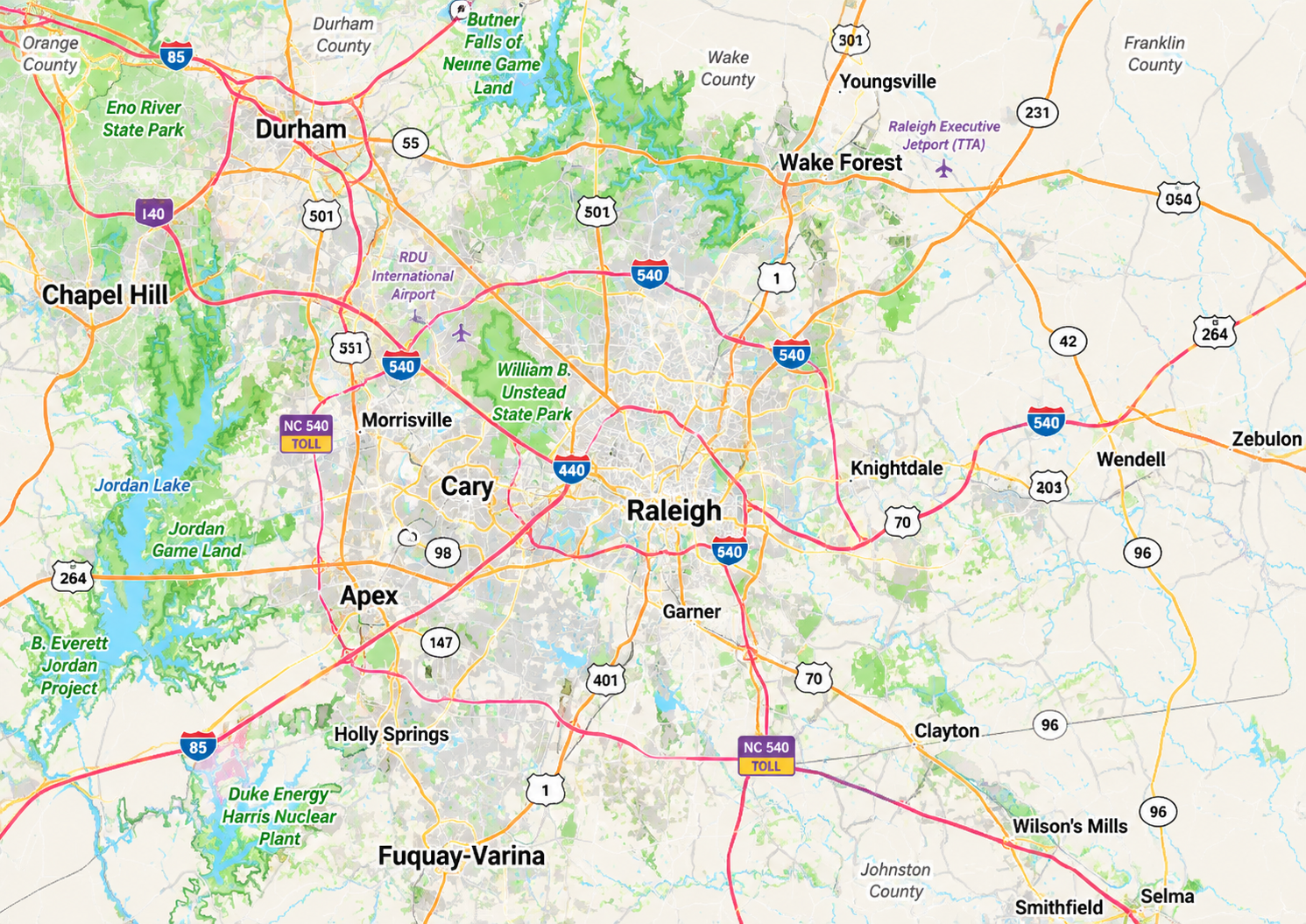
Compared to New York, former New Yorkers often weigh commute, schools, and space differently here. Below are the areas that come up most — with honest pros and cons.
What Brings New Yorkers to the Triangle — By Region
Moving from New York City to Raleigh?
NYC transplants most often cite housing costs, taxes, and wanting more space as the primary drivers. The Triangle offers a dramatically different cost structure without requiring a completely rural lifestyle.
Moving from Long Island to Raleigh?
Long Island buyers often find the Triangle familiar in suburban structure but dramatically more affordable. Shorter commutes and lower property taxes are the most commonly cited improvements.
Moving from Westchester to Raleigh?
Westchester transplants tend to prioritize school quality and community character. The Triangle offers strong schools, established communities, and a comparable suburban feel at a lower price point.
Moving from Upstate New York to Raleigh?
Upstate transplants often cite economic opportunity and milder winters. The Triangle’s job market and lower cost of living are the primary draws.
Cary
Typically among the higher-priced markets in the Triangle. Consistently high-performing public schools with many individual schools rated among the top in Wake County. Note: some high-demand schools are capped. Significant new construction along West Cary / Hwy 55 corridor; neighborhoods closer to downtown Cary tend to be more established. 15–20 min to major employers.
Families, professionals, and buyers who want a well-planned community with strong schools and a central Triangle location.
Higher price point. Mix of new construction in the west and established neighborhoods closer to the town center.
Cary Relocation Guide →Apex
Generally slightly more affordable than Cary with comparable school quality. 20–30 min to Raleigh and the Triangle. Historic downtown.
Families, buyers seeking a small-town feel with genuine character. Jordan Lake access.
Growing traffic on Highway 55. Fewer large employers directly nearby.
Apex Relocation Guide →Morrisville
Closest community to major tech employers — 5–12 min commute. More apartments and townhomes than single-family stock. Generally strong public schools.
Those who prioritize employer proximity and a denser, more urban feel.
Located very close to West Cary — often considered alongside it as an alternative.
Best Neighborhoods Near RTP →Holly Springs
A charming town adjacent to Apex and Fuquay-Varina. 25–35 min commute to Raleigh. Often offers newer homes at a lower price point than Cary. Well-regarded schools. Strong youth sports infrastructure.
Families looking for the best balance of price and quality of life.
Longer commute. Retail and dining scene still developing — improving fast.
North Raleigh
One of the higher-priced segments of the Raleigh market. Established neighborhoods with mature trees and larger lots. Close to business centers and downtown Raleigh.
Buyers who want resale over new construction. Those seeking character, larger lots, and established landscaping.
School quality varies more by specific neighborhood than in Cary or Apex. Older homes may need updating. New construction available at a higher price point.
Wake Forest
More space for the money. Great family-oriented town with strong schools. Growing retail and dining. 30+ min to downtown Raleigh.
Remote workers or buyers not tied to RTP. Those who want the most square footage and lot size for their budget.
Longest commute of these options. Best suited to those who rarely need a daily office commute.
Chapel Hill / Carrboro
School district consistently ranks among the top in North Carolina. Walkable town center. Arts scene and restaurants. City life shaped by the UNC campus — one of the country’s leading research universities. 20–30 min to RTP.
Those who appreciate a quieter university-town atmosphere, a walkable downtown, and a vibrant cultural scene. A good fit for those working in Chapel Hill, Carrboro, or Durham — commute to Raleigh and Cary will take more time.
Higher price point. The rhythm of the city is closely tied to the university — active cultural and sports life year-round.
Fuquay-Varina
Most affordable on this list. Quiet family-oriented town with plenty of new construction. Growing fast. 35–45 min to RTP and Raleigh.
Those looking for newer homes, more space, and an accessible price point.
Longest commutes. Area is growing quickly.
Priority Table
| Your Priority | Consider |
|---|---|
| Popular family communities | Apex, Holly Springs, Cary, Chapel Hill, Wake Forest, Fuquay-Varina |
| Strong public schools* | Throughout the Triangle — varies by address |
| New construction | Apex, Fuquay-Varina, Wake Forest, Durham and more → New Construction in Triangle NC |
| Short commute to major employers | Morrisville, Cary |
| Best value + decent schools | Fuquay-Varina, Wake Forest |
| Larger lots / more land | Wake Forest, Fuquay-Varina, South Raleigh |
| Established neighborhoods / mature trees | North Raleigh, Central Cary, parts of Apex |
| Walkable downtown feel | Chapel Hill, Carrboro, Downtown Raleigh |
* School district assignment depends on your exact address. See full school district guide below.
Schools: What New York Families Need to Know
Major school districts in the Triangle
- Wake County Public Schools — covers most of Raleigh, Cary, Apex, Morrisville, Holly Springs, Wake Forest, and Fuquay-Varina. The largest district in the region with 48 magnet schools and strong school choice options.
- Chapel Hill-Carrboro City Schools (Orange County) — covers Chapel Hill and Carrboro. Consistently ranks among the top districts in NC.
- Durham Public Schools — covers Durham. Quality varies by school.
- Chatham County Schools — covers Pittsboro, Chapel Hill (some addresses), and surrounding areas.
In North Carolina, schools are assigned by county — not by city name. Two houses on the same street can be in different counties with different school districts. County lines don’t always follow city boundaries: some addresses in Apex, Cary, Holly Springs, Fuquay-Varina, and Wake Forest may fall outside Wake County — into Chatham, Harnett, or Franklin County.
School assignment is address-based — research before signing. Some high-demand schools are capped. Charter schools are free with open enrollment by lottery; deadlines are typically January–February.
Always verify the county and assigned school for your specific address before signing a lease or purchase contract. Use NC School Explorer to check any address.
How Buying a Home in NC Differs From New York
- Due Diligence Fee: Non-refundable fee paid to seller at contract. Unlike NY’s contract deposit structure.
- Attorney state: NC is an attorney state — a real estate attorney handles closing. Different from NY but familiar concept.
- Speed: 30-day closes are standard. Faster than typical NY transactions.
- HOA communities: More common in NC new construction than in most NY suburbs.
- New construction volume: Much higher ratio of new builds than in NY metro area.
- Co-ops and condos: The co-op culture that dominates NYC does not exist here. Most purchases are fee-simple.
New Construction in the Triangle →
Insurance: What New York Transplants Should Know
Homeowners insurance: NC is significantly more affordable to insure than NY. No coastal hurricane risk in the Triangle. Standard policies cover wind and hail.
Auto insurance: NC rates generally lower than New York. Clean driving record matters — NC uses a point system.
Raising Kids in North Carolina vs New York
- More outdoor space — yards, not apartments
- Youth sports infrastructure throughout the Triangle
- 100+ miles of greenway trails
- Community pools in most HOA neighborhoods
- Lower cost of activities, camps, and lessons compared to NY metro
- Backyard lifestyle
- Local farms, pick-your-own, seasonal festivals — distinctly different from NY metro family culture
- Mountains 2.5 hours west, beaches 2.5 hours east
What NY parents say most often: “My kids actually go outside now.”
What a Typical Saturday Looks Like
Saturday in New York (suburbs)
LIRR or Metro-North into the city for the day. Or sit in LIE traffic. Overpay for everything. Home late. Exhausted.
Saturday in Long Island
Drive to the strip mall. Kids to three different activities in three different towns. Two hours in the car. Maybe the beach if you leave by 7am.
Saturday in the Raleigh area
Walk to the neighborhood pool or greenway trail. Drive 15 minutes to a farmers market or local brewery. Head to Jordan Lake for the afternoon. Back home in time to grill in the backyard.
Different pace. Most people who want this Saturday find it quickly here.
Travel and Airport Access
For New Yorkers used to JFK, LaGuardia, or Newark:
- RDU (Raleigh-Durham International): Direct flights to most major US cities
- NYC: ~2 hours direct · Chicago: ~2.5 hours · LA: ~5 hours · SF: ~5.5 hours
- Direct flights to major Northeast hubs — easy to get back to NY for family visits
- Charlotte Douglas (CLT) 2.5 hours away for additional routes
What Former New Yorkers Love — and Miss
What they love
- “I paid less for a house than my Manhattan apartment cost per year in rent”
- “My commute went from 90 minutes to 20”
- “I have a backyard. My kids go outside.”
- “Property taxes are a fraction of what I paid in New York”
- “Fall is just as beautiful as upstate NY — without the drive”
- “Neighbors actually talk to each other”
- “We’re saving more money every month than I thought possible”
What they miss
- The city. NYC’s energy, density, and 24/7 access to everything is genuinely irreplaceable.
- The food. The bagels, the pizza, the ethnic diversity of NYC cuisine at every price point.
- Public transit. The subway, for all its faults, meant freedom without a car.
- Proximity to everything. Museums, Broadway, the Hamptons, the Catskills — all within reach.
- The pace. Some people miss the drive and ambition of NY metro culture.
- Family. Many NY transplants have family still in NY — the distance is real.
Is Moving from New York to Raleigh Right for You?
You may love it here if you’re leaving New York because of
- Housing costs and rent
- Property taxes
- State and city income taxes
- Traffic and commute time
- Wanting more space for the same or less money
- Wanting to own, not just rent forever
- Milder winters
Usually a good fit
- Families wanting more house, yard, lower taxes, strong schools
- Remote workers no longer tied to NY metro
- Buyers priced out of NY/NJ/Westchester
- Long Island or Westchester suburbanites ready for lower costs
You may miss New York if you love
- NYC’s cultural density and 24/7 energy
- Public transit and car-free living
- Proximity to world-class museums, Broadway, and dining
- Being near extended family in the NY metro area
May not be a good fit
- People who need NYC’s cultural and professional ecosystem
- Those who rely on public transportation daily
- Anyone whose career is specifically tied to Wall Street or NYC media
Frequently Asked Questions
Moving from New York to the Triangle?
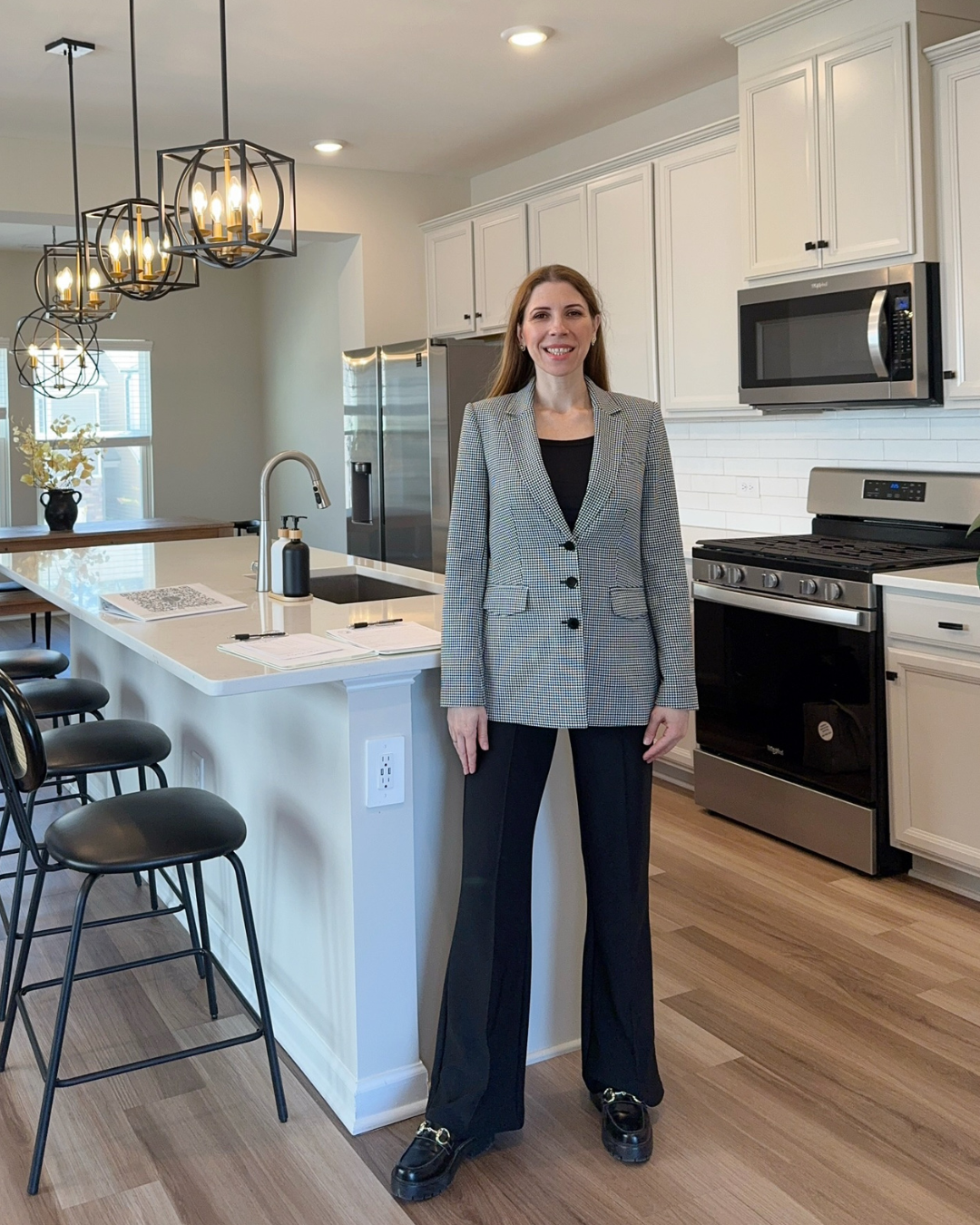
I’ve helped New York families compare Cary, Apex, Holly Springs, Morrisville, and Wake Forest — and navigate NC school assignments, builder contracts, and due diligence along the way.