Best Areas to Buy New Construction Homes Near Raleigh, NC
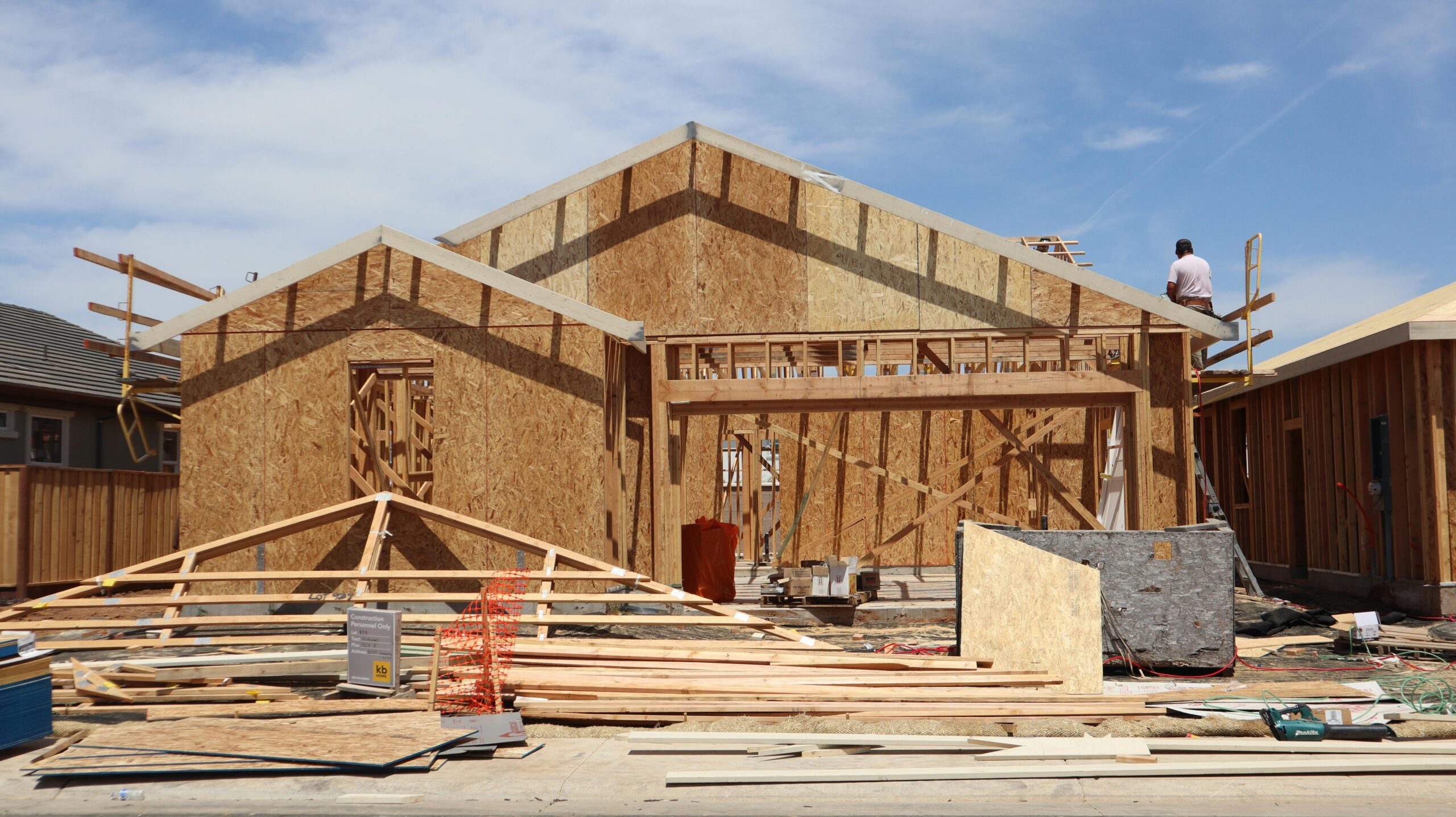
New construction is one of the primary reasons relocation buyers choose the Triangle over other markets. Modern floor plans, energy-efficient systems, builder warranties, and the ability to purchase before physically moving are all real advantages — especially for out-of-state buyers navigating a purchase remotely.
The Triangle has significant active builder inventory across dozens of communities, ranging from the $300s in eastern and southern growth areas to $700k+ in established western Wake County locations. Understanding where new construction is happening — and what each area offers — is the starting point for any buyer in this category.
Free 30-minute consultation · English & Russian
Anna Rukhlina · Real Estate Broker · DASH Carolina
New Construction Markets at a Glance
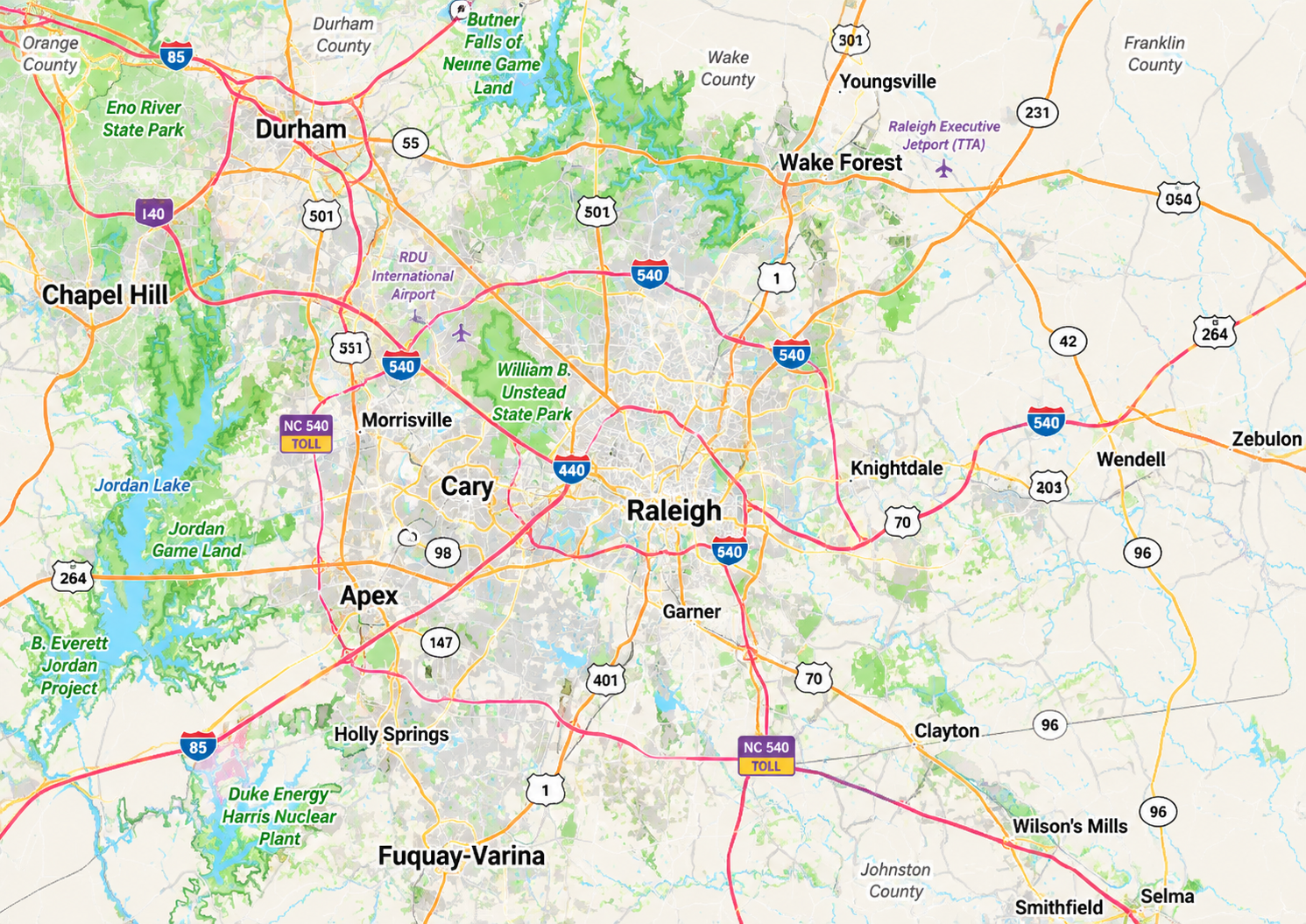
Use the map below to orient yourself across Wake, Johnston, Harnett, Franklin, and Chatham counties — then work through builder types, growing communities, budget ranges, and county considerations.
Start Here: Where Should You Look?
Three Types of New Construction
Before visiting a builder’s sales office, it helps to understand that “new construction” covers three very different situations.
Spec Homes (Move-In Ready)
The builder has already completed the home. What you see is what you get — no selections, no wait. These are the fastest path to closing and work well for buyers with a fixed move-in date. Inventory is limited and moves quickly.
Inventory Homes (Under Construction)
The home is already started and will be complete in 30–120 days. Some selections may still be available depending on the stage. This is the most common category buyers encounter — enough time to plan a move, some ability to personalize, and a defined timeline.
To-Be-Built (Presale / Build from Scratch)
You select a lot, a floor plan, and options before construction begins. Maximum personalization but the longest timeline — typically 8–14 months from contract to closing. Works well for buyers with flexibility. Not suited for buyers with a lease ending in 90 days.
Always confirm the specific timeline and available selections directly with the builder’s sales representative before signing a contract.
What It Means to Buy in an Actively Growing Community
Most new construction in the Triangle today is in communities that are still developing — meaning the neighborhood, the surrounding retail, and sometimes the roads are still being built alongside your home. This is different from buying new construction in an established area.
Why buyers choose these areas
Lower entry prices.
Communities in active development phases have historically offered lower prices than established neighborhoods. Getting in earlier in a community’s growth cycle has generally meant better pricing — though market conditions vary and this is a trend, not a guarantee.
New home advantages.
Builder warranty (typically 1-year workmanship, 2-year systems, 10-year structural), energy-efficient construction, modern floor plans, and no immediate maintenance costs.
Community momentum.
As infrastructure, retail, and amenities are built out around the community, demand tends to grow. Buyers who entered early in communities like Apex, Holly Springs, and Wake Forest have seen their areas develop considerably over time.
Honest trade-offs
Construction around you.
In an active development, you may have construction crews and heavy equipment nearby for months or years after you move in. This is normal — it still disrupts daily life.
Amenities are still forming.
The restaurant, the coffee shop, the yoga studio — they come later. In the first few years in a fast-growing community, expect to drive further for everyday conveniences than you will in five years.
Road infrastructure can lag.
Fast growth sometimes outpaces road improvements. Intersections that are fine today may be congested in two years. Worth researching planned road projects for the area.
Schools can be crowded.
Rapidly growing communities sometimes outpace school capacity. New schools get built — but there can be a period of overcrowding or reassignment while the district catches up. Verify directly with the school district.
Property taxes may rise.
As communities develop and home values increase, county reassessments can push property taxes higher. Not unique to new construction, but worth factoring in.
Actively Growing Communities
South and Southwest Wake County
This corridor has seen the highest concentration of new construction activity over the past decade and continues to grow.
Holly Springs
One of the most active markets in Wake County for new construction. Builders range from national production builders to regional options. The NC-55 biotech/pharma corridor runs through the southern part of the community, bringing employment and further development pressure. Ting Park and a developing downtown give the area genuine community infrastructure. Prices range from the mid-$400s for smaller new builds to $800k+ for larger homes on better lots.
Fuquay-Varina
Among the most active new construction markets in Wake County by volume. Large lots, competitive pricing, and a downtown with genuine local character (restaurants, breweries, coffee shops). Wake County schools and infrastructure, but buyers should verify county assignment in southern portions near the Harnett County border. Entry starts around $340k; most of the single-family new construction market runs from the mid-$400s to mid-$600s.
New Hill / Apex Southern Border
The area along the Apex-New Hill border, particularly along Olive Chapel Road and surrounding corridors, has active development with access to Apex infrastructure and Wake County schools. Generally lower land cost than central Apex but still close enough to benefit from Apex’s proximity to RTP and NC-540.
Angier
Angier sits in Harnett County — not Wake County. This distinction matters: different school system, different tax rates (generally lower than Wake), and different infrastructure. Angier offers some of the most affordable new construction in the broader Triangle area, with active builder activity and large lots at prices in the $290k–$425k range. For buyers who prioritize value and space and are comfortable with a longer commute and Harnett County schools, Angier is worth including in the search.
East Wake County
The eastern Triangle has become one of the fastest-growing parts of the region, with significant new construction activity at lower price points than western Wake County.
Knightdale
One of the most active new construction markets in eastern Wake County. 15–20 minutes from Downtown Raleigh, 30–40 minutes from RTP. New construction townhomes and single-family homes are available from the high $200s to the mid-$500s. Knightdale has benefited from major road improvements and is increasingly popular with buyers who want Wake County and lower prices without going as far east as Zebulon or Clayton.
Wendell
Active new construction with a real downtown that has developed local dining and event programming. Larger lots than many western Wake communities at lower prices. Wake County schools. New construction ranges roughly from the low $300s to mid-$500s depending on size and builder.
Zebulon
One of the most affordable new construction options in Wake County. Larger lots, competitive pricing, and significant builder activity. The trade-off is real distance — Zebulon is 30–40 minutes from RTP and 25–35 minutes from Downtown Raleigh. For buyers who prioritize space, budget, and new construction, Zebulon delivers. Pricing starts in the high $200s and runs to the low $400s for most of the market.
Garner
South of Raleigh on US-70, Garner has a mix of established neighborhoods and active new construction. Closer to Downtown Raleigh and RTP than most eastern Triangle communities, with prices generally above Zebulon or Wendell but below Apex or Holly Springs. New construction ranges from the mid-$300s to mid-$500s. Johnston County adjoins Garner’s southern edges — verify county assignment for specific properties.
Clayton
Johnston County — not Wake County. Lower property tax rates than Wake County, different school system. Clayton has been one of the fastest-growing towns in North Carolina for over a decade and offers some of the most square footage per dollar of any new construction in the Triangle. Active builder inventory from the high $200s to mid-$500s. The trade-off is commute — Clayton is 40–50 minutes from RTP and 30–40 minutes from Downtown Raleigh.
North Wake County and Franklin County
Wake Forest
The primary new construction market north of Raleigh within Wake County. US-1 South connects to Downtown Raleigh and RTP, though peak-hour traffic on this corridor is a consistent reality. Wake Forest has the most developed infrastructure of the northern communities — an established downtown, strong retail, and good day-to-day conveniences. New construction ranges from the mid-$400s to $700k+.
Rolesville
Adjacent to Wake Forest, Rolesville has active new construction at price points similar to or slightly below Wake Forest. Wake County schools. A quieter, smaller-town feel than Wake Forest proper, with growing builder activity. Pricing generally in the $400k–$600k range for single-family new construction.
Youngsville (Franklin County)
Just north of Wake County in Franklin County. Lower property taxes than Wake County, different school system (Franklin County Schools). Growing new construction activity, larger lots, and a more rural feel than communities inside Wake County. For buyers who want the northern Triangle at the lowest price point, Youngsville is worth researching. Pricing starts in the mid-$300s.
Franklinton (Franklin County)
Further north, Franklinton is in Franklin County with the same county distinctions as Youngsville. More rural character, larger parcels available, and some of the most affordable land in the broader Triangle region. Active for buyers who want a genuinely rural to semi-rural setting with new construction. Lower density, longer drives to Triangle core amenities.
Chatham County
Pittsboro / Chatham Park
Chatham County sits west and southwest of Wake County, bordering Jordan Lake. Pittsboro is the county seat and home to Chatham Park — one of the largest mixed-use planned community developments in North Carolina, with plans for tens of thousands of homes, commercial development, and its own infrastructure over time. For buyers who want to be near Jordan Lake, prefer a semi-rural or small-town character, and are comfortable with Chatham County schools (separate from Wake County), Pittsboro and Chatham County offer an increasingly relevant option. Pricing varies but land and new construction remain more affordable than equivalent Wake County communities. Verify school assignments and infrastructure status directly — Chatham Park is an ongoing development with changing timelines and phases.
What Does My Budget Buy in New Construction?
General planning ranges based on active market conditions. Prices vary by builder, floor plan, lot, and upgrades. Verify current pricing directly with builders or your agent.
Entry-level new construction is primarily in Johnston, Harnett, and Franklin counties. Communities in Clayton, Angier, Zebulon, and Youngsville offer the most active inventory at this price point — typically smaller single-family homes or townhomes. Some Wake County townhome new construction also falls in this range in Knightdale and Garner.
The largest and most competitive segment for new construction in the Triangle. This range opens up most of the active growth markets: Fuquay-Varina, Wake Forest, Wendell, Knightdale, and Holly Springs (smaller floor plans). Single-family homes with 3–4 bedrooms, 2-car garage, and standard builder finishes are the norm at this price. Clayton and Garner also offer larger homes in this range.
Broader selection in Holly Springs, Wake Forest, larger homes in Fuquay-Varina, and entry-level new construction in Apex. At this price point, buyers can typically access larger floor plans (2,500–3,500 sqft), premium lot positions, and more upgrade options included.
New construction at this price point is concentrated in Apex, select Holly Springs communities, premium phases of Chatham Park, and infill new construction in western Cary and Morrisville (limited). Larger homes, premium finishes, and sought-after locations.
Why County Matters
Most buyers focus on city names — but in the Triangle, the county matters as much as the city.
Wake County
The largest school district in North Carolina and the most developed infrastructure in the region. Cary, Apex, Holly Springs, Raleigh, Wake Forest, Fuquay-Varina (most of it), Knightdale, Wendell, Zebulon, Garner, and Rolesville are all primarily Wake County. Higher home prices reflect the demand for Wake County schools and infrastructure. Most relocation buyers default here — and for good reason.
Johnston County
Clayton, Smithfield, Selma, and portions of Garner are in Johnston County. Lower property tax rates than Wake County, more house for the money, and active new construction. Johnston County Schools is a separate system from Wake. A strong option for buyers who prioritize value and space and are comfortable researching the school system independently.
Harnett County
Angier, Lillington, and southern portions of the Fuquay-Varina area fall in Harnett County. Lower taxes, lower prices, larger lots — and longer commutes to Triangle employment centers. Harnett County Schools is the school system. Worth researching for buyers where affordability is the top priority.
Franklin County
Youngsville and Franklinton sit north of Wake County in Franklin County. More rural character, larger parcels, lower prices, and lower taxes than Wake. Franklin County Schools. The trade-off is distance from Triangle amenities and employment. A genuine option for buyers who want land and quiet at the lowest price in the broader region.
Chatham County
West of Wake County, Chatham County includes Pittsboro and the Chatham Park development area — near Jordan Lake. Chatham County Schools is separate from Wake. Lower prices and more rural character than Wake County, with Chatham Park bringing new infrastructure and development over time.
| County | Key Communities | School System | vs Wake County |
|---|---|---|---|
| Wake | Apex, Holly Springs, Wake Forest, Fuquay-Varina (most), Knightdale, Wendell, Zebulon, Garner (most), Rolesville | Wake County Public Schools | Baseline |
| Johnston | Clayton, Smithfield, Selma, Garner (portions) | Johnston County Public Schools | Lower taxes, lower prices |
| Harnett | Angier, Lillington, Fuquay-Varina (south portions) | Harnett County Schools | Lower taxes, lower prices |
| Franklin | Youngsville, Franklinton | Franklin County Schools | Lower taxes, rural feel |
| Chatham | Pittsboro, Chatham Park area | Chatham County Schools | Lower prices, near Jordan Lake |
Tax rates and school boundaries change. Always verify with the county tax assessor and school district before making a housing decision.
Why You Need an Agent for New Construction
This is the most important section on this page.
Many buyers walk into a builder’s sales office without representation, assuming it’s like buying a car — you’re dealing directly with the seller. In new construction, this works against you. Here’s why:
The builder’s agent works for the builder.
The sales representative in the model home is employed by the builder. Their job is to sell homes at the builder’s terms. They are not representing your interests.
Builder contracts are not standard.
Unlike resale transactions that use North Carolina standard contracts, builder contracts are written by the builder’s attorneys to protect the builder. Earnest money terms, inspection rights, warranty details, and closing timelines all favor the builder by default. A buyer’s agent reviews these on your behalf.
An agent costs you nothing on new construction.
Builders price buyer agent commission into the home’s cost regardless of whether a buyer brings an agent. If you don’t bring an agent, the builder keeps that commission. Representation costs you nothing and protects your interests significantly.
Upgrades and incentives are negotiable.
A buyer’s agent familiar with Triangle builders knows which incentives are actually being offered, what the real upgrade costs are, and how to structure requests effectively.
Inspection still matters.
New construction homes still need independent inspections — during framing, before drywall, and at completion. An agent can coordinate this process and help you navigate issues with the builder if they arise.
Common New Construction Mistakes
Visiting builder sales offices without an agent.
See above. Always bring representation or register with an agent before your first visit. Most builders require agent registration on or before the first visit to honor the commission arrangement.
Signing a contract without understanding the timeline.
“12 months” can become 14 or 16. Build in flexibility and don’t plan a lease end date or a work start date around a builder’s projected completion.
Underestimating upgrade costs.
Base prices are real, but the home in the model is not the base price home. Upgrades — flooring, countertops, fixtures, lot premiums — add up quickly. Budget 10–20% above the advertised base price for a realistic starting point.
Choosing a community because it’s cheapest, not because it fits your life.
The lowest price is usually the furthest from amenities and employment. Over time, daily life in a location that doesn’t fit your needs compounds. Match the community to your lifestyle first, then compare prices.
Skipping the independent home inspection.
Builder warranties exist — and they’re valuable. But they don’t replace an independent inspection. Defects caught before closing are the builder’s responsibility to fix. Defects found after closing are your problem to document and claim.
Not researching the builder.
Not all builders are equal. Research reviews, talk to current residents in the community if possible, and ask about warranty responsiveness. Your agent can help evaluate builder reputation.
Frequently Asked Questions
Buying New Construction in the Triangle?
I represent buyers in new construction across Wake, Johnston, Harnett, Franklin, and Chatham counties — builder contracts, inspections, incentives, and community selection included.