Real Estate Investing in Raleigh, Cary & the Triangle Area, NC
Build Wealth Through North Carolina Real Estate
The Raleigh-Durham-Chapel Hill region, commonly known as the Triangle, has become one of the most attractive real estate investment markets in the United States. Strong population growth, expanding employment opportunities, nationally recognized universities, and continued residential development have created long-term demand for housing across the region.
Whether you’re looking for rental properties, long-term appreciation, new construction opportunities, or your first investment property, understanding local market dynamics is essential before making a purchase.
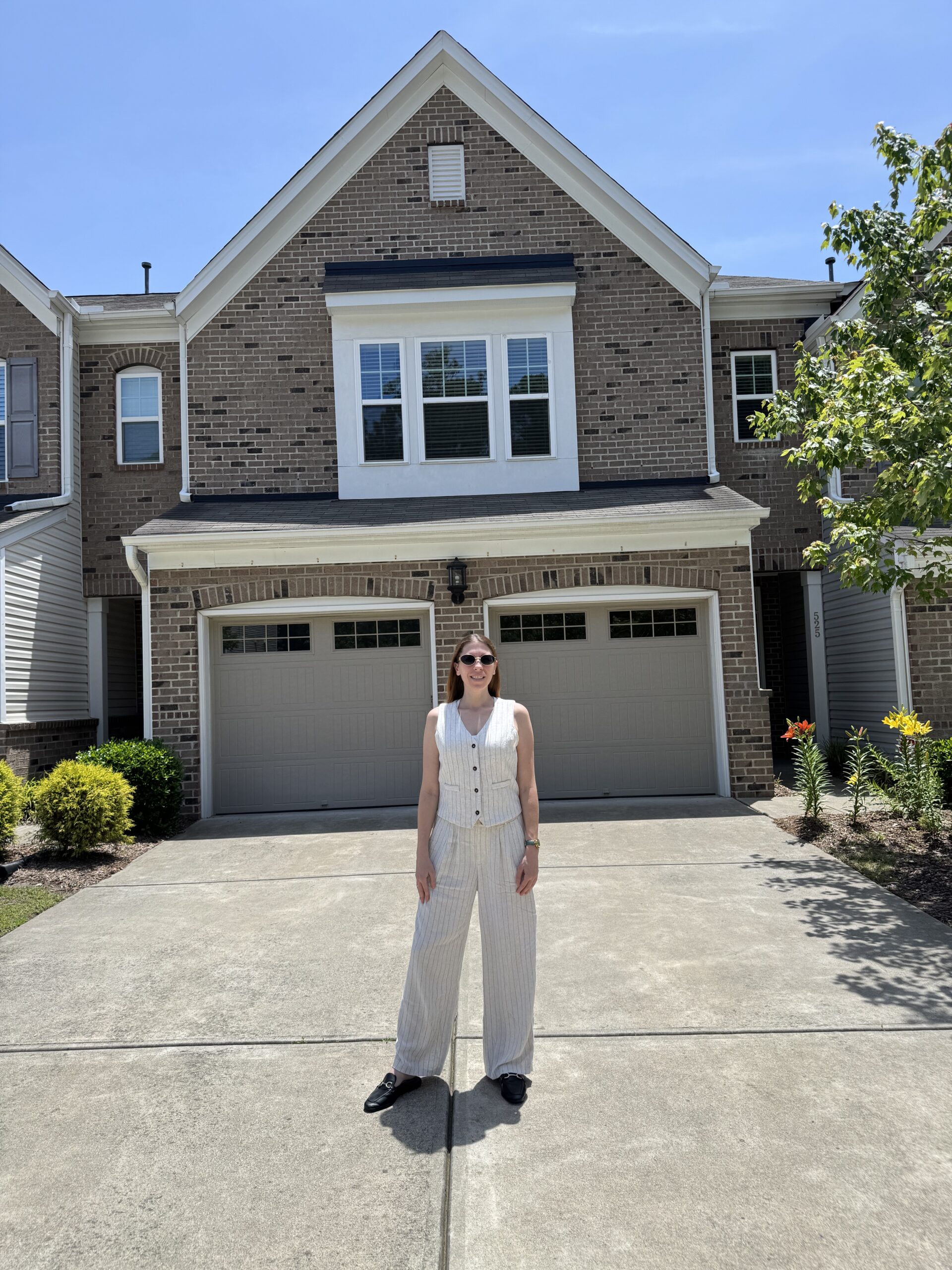
My Perspective as a Triangle Broker
I work with investors from California, New York, New Jersey, Florida, Texas, and other states evaluating the Triangle as a long-term investment market.
The first thing I explain is that the Triangle is not one market — it is a collection of different submarkets with different strengths, risks, and investment profiles.
Some areas offer stronger tenant demand, established infrastructure, and a longer track record of appreciation, but may be harder to cash flow at today’s prices. Other areas provide lower entry points, newer housing stock, and potentially more favorable rent-to-price ratios, but may be earlier in their growth cycle.
There is no single “best” investment market in the Triangle.
An investor focused on long-term appreciation may evaluate Cary, Apex, Morrisville, or parts of Raleigh differently than an investor focused on lower acquisition costs or rental yield. Likewise, growing markets such as Clayton, Garner, Knightdale, Wendell, Zebulon, and other emerging areas may appeal to investors looking for a different risk-reward profile.
Rather than asking which city is best, I encourage investors to first define their strategy:
- Long-term appreciation
- Buy-and-hold rental income
- New construction investing
- Short-term rentals
- Value-add opportunities
- Portfolio diversification
The right market depends on your goals, timeline, risk tolerance, and budget.
What has attracted many investors to the Triangle is not a single city, employer, or county. It is the region’s combination of population growth, economic diversification, higher education, healthcare, technology, life sciences, and continued housing demand across multiple submarkets.
Which Triangle Market Fits Your Investment Strategy?
Not every Triangle market serves the same type of investor. While the entire region benefits from population growth, employer expansion, and continued housing demand, different markets offer different trade-offs between appreciation potential, entry price, tenant demand, and cash flow.
Appreciation-Focused Markets
These markets are often favored by investors prioritizing long-term appreciation over immediate cash flow. Entry prices are higher, but strong tenant demand, proximity to RTP, and limited land availability continue to support long-term value.
Best for:
- Long-term appreciation
- High-quality tenant profiles
- Low vacancy risk
- Investors with a 7–10+ year horizon
Balanced Appreciation & Affordability
Wake Forest, Holly Springs, Fuquay-Varina
These markets appeal to investors seeking a balance between appreciation potential and purchase price. They generally offer newer housing stock, strong population growth, and more attainable entry points than Cary.
Best for:
- Buy-and-hold investors
- New construction rentals
- Family-oriented tenant demand
- Moderate entry prices
Better Price-to-Rent Ratios
Many investors looking for stronger rent-to-price relationships begin their search here. Purchase prices are generally lower than central Wake County while maintaining access to major employment centers.
Best for:
- Long-term rentals
- New investors
- Better entry pricing
- Hybrid appreciation and income strategies
Entry-Level Investment Markets
These markets typically offer lower acquisition costs and may appeal to investors focused on affordability and long-term growth potential.
Best for:
- Budget-conscious investors
- Entry-level portfolios
- Long-term growth strategies
- Investors willing to trade convenience for price
Why Investors Are Looking at the Triangle
The Triangle region continues to attract both residents and businesses from across the country. Several structural factors drive long-term housing demand.
| Factor | Details |
|---|---|
| Population | 2.4M+ residents and growing. Thousands of new residents annually from California, New York, New Jersey, Florida, Texas, Illinois, and Virginia. |
| Key Industries | Technology, Biotech, Healthcare, Advanced Manufacturing, Education, Financial Services |
| Universities | NC State (Raleigh), Duke (Durham), UNC Chapel Hill — three major research universities supporting innovation and workforce growth |
| Research Triangle Park | One of the largest research and technology hubs in the United States — continuous employer attraction |
| New Arrivals | Consistent in-migration from higher-cost coastal markets creates sustained rental and purchase demand |
Major Employment Drivers
The Triangle economy is supported by a diverse mix of technology, healthcare, education, life sciences, pharmaceutical manufacturing, and financial services employers.
RTP & Morrisville
IBM, Cisco, Lenovo, Fidelity Investments, NetApp, RTI International
Cary
SAS, Epic Games, MetLife
Durham
Duke University, Duke Health, IQVIA, Biogen
Chapel Hill
UNC Health, UNC-Chapel Hill
Holly Springs
FUJIFILM Diosynth Biotechnologies, Amgen
Clayton
Novo Nordisk, Grifols
Raleigh
WakeMed, NC State University, State Government, Red Hat
The diversity of the regional economy helps support long-term housing demand across multiple price points and property types.
Property Taxes in North Carolina
Property taxes are one of the first questions investors from high-tax states ask. North Carolina is generally a lower-tax state compared to the Northeast and Midwest.
State Comparison
| State | Typical Effective Rate | On a $450K Property |
|---|---|---|
| New Jersey | ~2.2% | ~$9,900/year |
| Illinois | ~2.0% | ~$9,000/year |
| New York | ~1.7% | ~$7,650/year |
| Texas | ~1.6% | ~$7,200/year |
| Connecticut | ~1.5% | ~$6,750/year |
| North Carolina | ~0.7-1.0% | ~$3,150-$4,500/year |
| Florida | ~0.8% | ~$3,600/year |
Rates vary by county and municipality. Wake County combined rate (county + city for Raleigh addresses) is approximately $0.90-$1.00 per $100 of assessed value. Johnston County is generally lower. Durham County is slightly higher.
| County | Approximate Combined Rate |
|---|---|
| Wake County (Raleigh addresses) | ~$0.90-$1.00 per $100 assessed value |
| Wake County (unincorporated) | ~$0.60 per $100 county rate only |
| Johnston County | Generally lower than Wake County |
| Durham County | Generally slightly higher than Wake County |
Tax rates are subject to change. Properties are reassessed periodically — Wake County’s most recent reassessment was in 2024. Following a reassessment in a rising market, tax bills may increase even if the rate does not change. Always verify current rates with the county and consult a tax professional for investment planning.
Is North Carolina Landlord-Friendly?
North Carolina is generally considered a more landlord-friendly state compared to many coastal markets — particularly California, New York, and New Jersey. However, landlord-tenant law has nuances that depend on lease terms, tenancy type, occupant status, and individual circumstances.
The following is a general overview for informational purposes only and does not constitute legal advice. Consult with a licensed North Carolina real estate attorney before making investment decisions based on legal assumptions.
| Topic | NC Overview |
|---|---|
| Rent Control | No rent control anywhere in North Carolina. State law prohibits municipalities from enacting rent control ordinances. This applies to long-term residential rentals. HOA Rental Restrictions: HOAs may impose their own rental limitations independent of rent control law — including caps on the percentage of units that may be rented at any time (commonly 20–30%). Always review HOA governing documents (CC&Rs and bylaws) before purchasing as an investment. Use Restrictions: Residential properties may only be rented for residential use. Renting a residential unit for commercial purposes may violate local zoning ordinances, HOA rules, or both. Verify permitted use before purchasing. |
| Short-Term Rental Regulation | STR (Airbnb, VRBO) is regulated separately from rent control — through local ordinances and HOA rules. Raleigh allows STR with registration. Other municipalities have their own requirements. Always verify locally before purchasing for STR purposes. |
| Security Deposit | Maximum deposit amount varies depending on lease term and tenancy type. Consult with a local attorney for current limits applicable to your specific situation. |
| Eviction Process | NC is generally considered more landlord-friendly than coastal states for eviction. The process begins with formal written notice, followed by court filing if the issue is not resolved. Standard cases are typically resolved faster than in states like California or New York. Non-standard situations — occupants without leases, complex tenancy arrangements, estate situations — can be significantly more involved and should be handled with legal counsel. |
| Entry Requirements | Landlords are generally required to provide advance notice before entering a rental property except in emergencies. |
| Lease Requirements | Leases longer than 12 months must generally be in writing to be enforceable. |
| Property Management | NC allows landlords to self-manage. Licensed property management companies are widely available throughout the Triangle — an important consideration for out-of-state investors. |
Types of Real Estate Investments in the Triangle
Different investment strategies work better in different parts of the Triangle. The table below is a general guide — each property and location requires individual analysis.
| Investment Type | Where It Works | Key Considerations |
|---|---|---|
| Long-Term Rental — SFH | Clayton, Garner, Knightdale, Wake Forest, Zebulon | Core Triangle strategy. Appreciation + stable tenant. Better price-to-rent ratios in Johnston County vs. central Wake. |
| Long-Term Rental — Townhome | Apex, Cary, Raleigh, Knightdale | Lower maintenance than SFH. HOA handles some exterior work. Strong demand from young professionals and families. |
| New Construction Buy-and-Hold | Clayton, Knightdale, Fuquay-Varina, Garner | Builder warranty (typically 1-10 years) reduces early maintenance costs. Modern layouts attract tenants. Builder incentives can improve initial basis. |
| Short-Term Rental (Airbnb/VRBO) | Raleigh (with registration), Durham, Chapel Hill | RTP generates business travel demand. Verify local ordinances and HOA rules before purchasing. Higher revenue potential but more management-intensive. |
| Multi-Family (Duplex/Triplex) | Raleigh, Durham | More common in urban cores than suburban markets. Harder to find in Wake County suburbs. |
| Fix and Flip | Johnston County, outer Wake County, Franklin County | Finding suitable properties has become more competitive and entry costs have risen. Buyers willing to look beyond immediate Raleigh core generally find more opportunities. Requires careful budget analysis. |
| BRRRR Strategy | Clayton, Zebulon, Johnston County | More viable where asset prices allow sufficient equity creation. Requires a reliable contractor network and accurate ARV estimation. |
| Appreciation-Focused Hold | Cary, Apex, Morrisville | Lower cash flow but strong appreciation history. Often favored by investors from high-cost states with a long hold horizon. |
Best Cities for Real Estate Investing in the Triangle
Each Triangle market has a different profile for investors. This table summarizes key differences — individual properties and neighborhoods vary significantly within each market.
| City | Entry Price Range | Primary Investor Profile | Best For | County |
|---|---|---|---|---|
| Raleigh | Wide range — low $300s to $1M+ | Appreciation + diversification | Long-term hold, diverse submarkets | Wake |
| Cary | Upper $400s+ | Appreciation, high-quality tenant | Long hold, low vacancy, established market | Wake |
| Apex | Mid $400s+ | Appreciation | Long hold, RTP proximity, family tenants | Wake |
| Knightdale | Mid $300s+ | Appreciation + some cash flow | Wake County entry point east of Raleigh | Wake |
| Garner | High $200s+ | Appreciation + better price-to-rent | Wake County proximity to Raleigh | Wake / Johnston |
| Clayton | Low $300s+ | Better price-to-rent, appreciation | More accessible entry, Johnston County | Johnston |
| Wake Forest | Mid $300s+ | Appreciation | Northern Wake County growth, master-planned | Wake |
| Fuquay-Varina | Mid $300s+ | Appreciation + some cash flow | Southwest Wake growth corridor | Wake / Harnett |
| Holly Springs | Mid $400s+ | Appreciation | Biotech employment, family demand | Wake |
| Zebulon | Low to mid $300s | Best price-to-rent in Triangle | Budget investors, outer market | Wake / Johnston / Franklin |
Out-of-State Investor Considerations
Many Triangle investors are relocating from or remain based in California, New York, New Jersey, and other high-cost states. Remote ownership is common and workable — but requires planning.
| Topic | What to Know |
|---|---|
| Property Management | Licensed property management companies are widely available in the Triangle — typically charging 8-12% of monthly rent. Essential for remote owners who cannot handle maintenance calls or tenant issues locally. |
| Tenant Screening | NC landlords have fairly standard screening tools. Work with a property manager familiar with local tenant screening norms. |
| Remote Closing | NC allows remote closings with appropriate power of attorney arrangements. Coordinate with your attorney and title company in advance. |
| NC Income Tax | Rental income from NC property is subject to NC state income tax regardless of where you live. NC has a flat individual income tax rate. Consult a tax professional familiar with multi-state filings. |
| Depreciation & Federal Taxes | Standard federal depreciation rules apply to NC investment properties. New construction may offer bonus depreciation opportunities. Consult a CPA with real estate investment experience. |
| HOA Restrictions | Many Triangle communities — especially newer ones — have HOAs that may restrict rental activity, require tenant approval, or limit the number of rentals in a community. Verify HOA rules before purchasing. |
| Market Research Remotely | I work with out-of-state buyers regularly — video tours, detailed property comparisons, and local market context. Most buyers visit once or twice before closing. |
What Drives Long-Term Appreciation in the Triangle
No market guarantees future performance. Investors evaluating the Triangle typically focus on several long-term demand drivers that have historically supported both owner-occupied housing demand and rental demand.
Areas frequently discussed by investors include:
- Cary, Apex, and Morrisville for proximity to RTP and established demand
- Holly Springs and Fuquay-Varina for continued population growth and new construction activity
- Wake Forest and Rolesville for northern Wake County expansion
- Knightdale and Garner for commuter demand east of Raleigh
- Clayton for pharmaceutical manufacturing growth and Johnston County expansion
Growth drivers vary by market and include RTP employment, healthcare expansion, pharmaceutical manufacturing investment, university-related demand, infrastructure projects, and continued in-migration from higher-cost states.
| Factor | Triangle Status |
|---|---|
| Population Growth | Consistent. Thousands of new residents annually from higher-cost states. |
| Job Creation | Strong. Google, Cisco, IBM, Lenovo, Novo Nordisk, Grifols, Epic Games, and others continue expanding Triangle operations. |
| Infrastructure Investment | Active. I-540 expansion, BRT transit development, continued road and utility investment. |
| School Systems | Strong. Wake County is one of the largest and better-funded school districts in NC — drives family demand. |
| University Pipeline | NC State, Duke, and UNC produce graduates who often remain in the region — sustaining workforce growth. |
| New Construction Supply | Active but largely absorbed by demand. High absorption rates in most markets. |
| In-Migration Profile | Buyers from CA, NY, NJ see Triangle prices as affordable even at current levels — sustaining demand floor. |
Past performance does not guarantee future results. Each property and location should be evaluated individually. Market conditions, interest rates, and local supply can affect both appreciation and rental income. This overview is for informational purposes only and does not constitute investment advice.
Frequently Asked Questions — Triangle Real Estate Investing
Important Disclosures
This guide is for informational purposes only and does not constitute investment advice, legal advice, or tax advice. Real estate investment involves risk, including the potential loss of principal. Past market performance does not guarantee future results.
Consult a licensed real estate attorney for questions about landlord-tenant law, lease requirements, and eviction procedures. Consult a CPA or tax professional for questions about property taxes, rental income taxation, and investment structuring. Market data reflects general conditions and varies by property and location.
Looking for Investment Opportunities in the Triangle?
Whether you are evaluating your first rental property, comparing appreciation-focused markets, analyzing cash-flow potential, or building a long-term portfolio, local market knowledge matters.
I help investors compare Triangle markets, evaluate rental potential, identify new construction opportunities, review HOA rental restrictions, and understand the trade-offs between appreciation, cash flow, and entry price.
I regularly work with investors from California, New York, New Jersey, Florida, Texas, and other states who need local insight and representation throughout the buying process.
Anna Rukhlina · Real Estate Broker · DASH Carolina
919-332-6256 · [email protected]
English & Russian
Raleigh, Cary & the Triangle Area, NC