Moving from California to Raleigh, NC
Is It Worth It?
Compare housing costs, taxes, schools, weather, lifestyle, traffic, and daily life — before you make the move.
Free 30-minute consultation · English & Russian
Anna Rukhlina · Real Estate Broker · DASH Carolina
Why Californians Are Moving to Raleigh
Most Californians who relocate to the Raleigh area cite the same reasons:
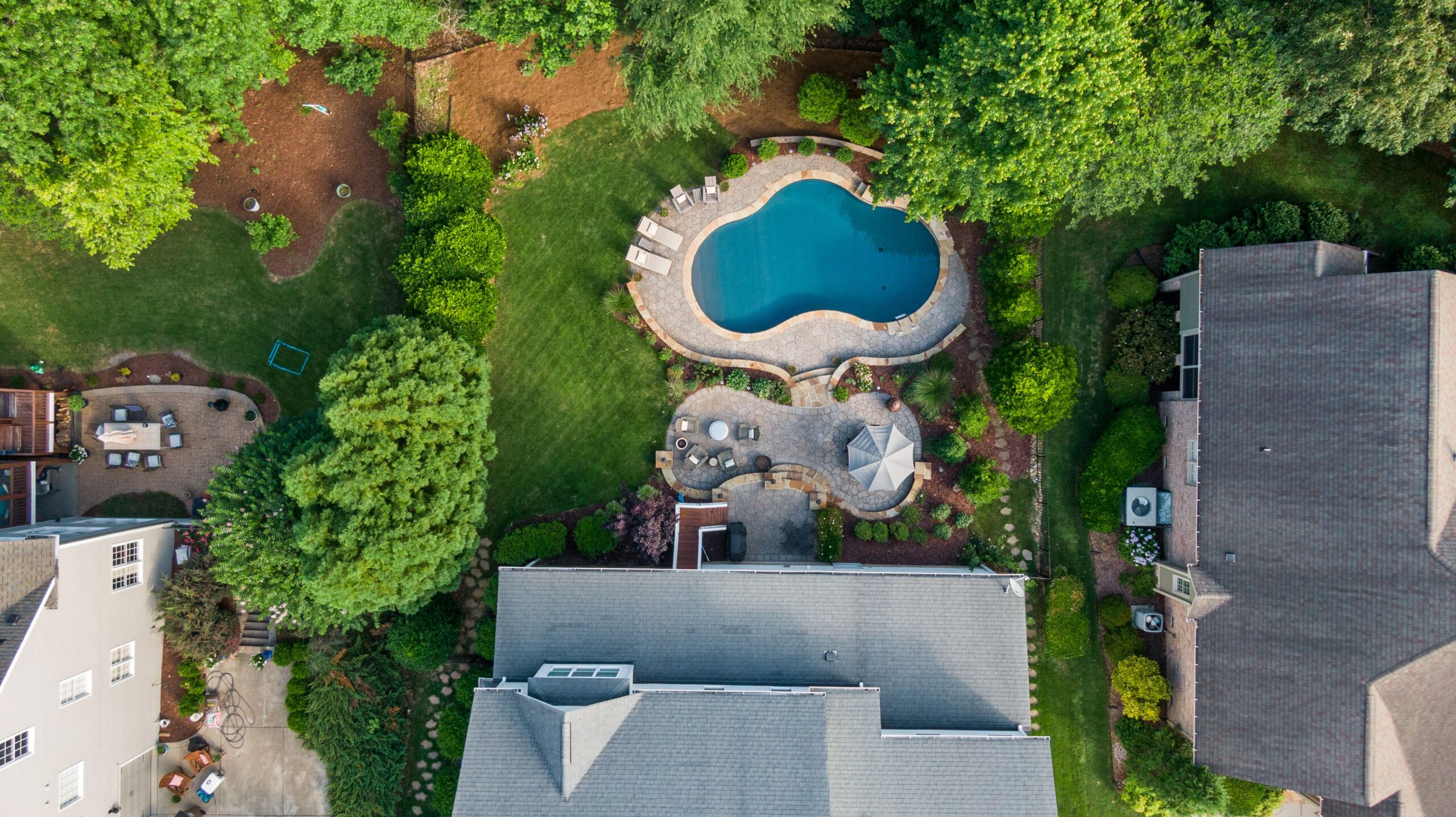
California remains one of the largest sources of relocation buyers moving to the Raleigh and Triangle area — from the Bay Area, Los Angeles, Orange County, and San Diego specifically.
California vs Raleigh Area: At a Glance
| Category | California | Raleigh Area |
|---|---|---|
| Home prices | Among the highest in the US | Significantly lower |
| State income tax | 9.3%–13.3% (progressive) | 3.99% flat (2026)* |
| Property tax | Avg 1.1–1.55% of purchase price | ~0.84–0.87% of assessed value** |
| Sales tax | Avg ~8.5% (up to 10.25%+) | 7.3% (Wake County)*** |
| Gas | Among the highest in the US | Below national average |
| Electricity | Higher than national average | Moderate — typical for the Southeast |
| Childcare (full-time) | Among the most expensive in the US | Significantly lower |
| Average commute | 35–90 min | 15–30 min |
* NC income tax rate is scheduled to decrease further: 3.49% by 2027, 3.14% by 2030. No city income tax. Rates subject to legislative change. Consult a CPA for your specific situation.
** Combined Wake County + city/town rate. Varies by municipality. For current rates visit wake.gov. Rates reflect 2025–2026 fiscal year.
*** Wake County rate as of April 2026. Rates may vary slightly by municipality. This is a general comparison — consult a tax professional for your specific situation.
Taxes: California vs North Carolina
One of the top reasons Californians move — and it deserves its own section.
- Income tax: California’s income tax ranges from 9.3% to 13.3% depending on income level. North Carolina has a flat 3.99% rate for 2026 — with no city income tax — scheduled to decrease to 3.49% by 2027.
- Property tax: California buyers typically pay 1.1–1.55% of purchase price (plus Mello-Roos and local bonds). Wake County combined rates are ~0.84–0.87% — applied to a significantly lower home price.
- Vehicle registration: California charges annual registration fees based on vehicle value — often substantial. NC charges an annual vehicle property tax via the DMV plus a flat registration fee — typically much lower for most households.
- Sales tax: California averages ~8.5% (up to 10.25%+ in some areas). Wake County NC is 7.3%.
- Capital gains: Taxed as income in both states. NC’s flat rate is lower for high earners.
General comparison only. Tax laws change and individual situations vary. Consult a licensed CPA for advice specific to your circumstances.
What Your California Budget Buys in the Triangle
If you’re shopping in a price range that would typically buy:
- A condo or townhome in many California markets → You may be able to purchase a single-family home with a yard in parts of the Triangle.
- A smaller home in an inland California suburb → You may find larger homes, newer construction communities, and more outdoor space in many Triangle markets.
- An entry-level home in a highly competitive California neighborhood → You may have access to a wider range of neighborhoods and housing options throughout the Triangle.
Real examples — without specific prices
If you’re moving from the Bay Area, a family selling a townhome may be surprised by the amount of space available in communities such as Apex, Holly Springs, or Wake Forest.
Many Orange County buyers find that homes with larger yards and newer construction are more accessible in the Triangle than they expected.
Some Los Angeles buyers prioritize shorter commutes and choose Cary or Morrisville because of proximity to major employers.
Why Many California Buyers Choose New Construction
The Triangle has an unusually high volume of new construction compared to most California markets. For many California buyers this is a welcome surprise.
- More inventory available than in the resale market
- Builder incentives — rate buydowns, closing cost assistance
- Modern open floor plans and finishes
- Energy efficiency and builder warranties (typically 1-2-10 year)
- Lower maintenance in early years
- Community amenities — pools, trails, playgrounds — built in
Weather: California vs North Carolina
What Californians Usually Love About NC
- Fall colors — real ones. October in the Triangle is something California doesn’t offer.
- Four actual seasons
- Green landscapes and regular rainfall
- Snow within driving distance without living in it
What Californians Struggle With
- Humidity. July and August are heavy, sticky, and unlike anything on the California coast.
- Pollen. Late February through May. Real, visible, unavoidable.
- Summer thunderstorms — frequent, dramatic, usually brief.
What North Carolina Doesn’t Have
Wildfires · Multi-year droughts · Major earthquakes · Santa Ana wind events
Traffic: Is Raleigh Really Better Than California?
| Los Angeles | Bay Area | Raleigh Area | |
|---|---|---|---|
| Average commute | 45–90 min | 40–75 min | 15–30 min |
| Rush hour | 6am–10am, 3pm–8pm | 6am–10am, 3pm–8pm | 7am–9am, 4pm–6pm |
Triangle traffic is real and growing. But it is not the 405. Many former Californians describe shorter commute times as one of the most noticeable quality-of-life improvements after moving.
You will need a car. Transit exists but is limited outside downtown Raleigh and Durham.
What Brings Californians to the Triangle — By Region
Moving from the Bay Area to Raleigh?
The Triangle is one of the most popular destinations for Bay Area relocants. Lower housing costs, a growing tech sector around Research Triangle Park, and strong schools are the most common reasons.
Moving from Los Angeles to Raleigh?
LA transplants most often cite traffic, cost of living, and housing affordability as the drivers. The Triangle offers a significantly different pace — with a real food scene, live music, and professional sports.
Moving from Orange County to Raleigh?
The suburban lifestyle that Orange County is known for — community pools, youth sports, walkable retail — translates well to communities throughout the Triangle at a lower price point.
Moving from San Diego to Raleigh?
San Diego has exceptional weather — and that’s worth acknowledging honestly. What the Triangle offers in return: mountains 2.5 hours west, beaches 2.5 hours east, no wildfires, no earthquakes, and significantly lower housing costs.
What’s actually here
- Carolina Hurricanes (NHL), ACC college sports (Duke, UNC, NC State)
- James Beard-recognized chefs in Raleigh and Durham
- Durham Performing Arts Center (DPAC) — one of the top-grossing venues in the US
- NC Museum of Art — free admission
- 100+ miles of greenway trails in Raleigh alone
- Jordan Lake, Falls Lake, Eno River State Park
- Blue Ridge Parkway 2.5 hours west, Outer Banks 2.5 hours east
- Growing craft brewery and farm-to-table food scene
Where Californians Usually Choose to Live
Compared to California, former Californians often weigh commute, schools, and space differently here. Below are the areas that come up most — with honest pros and cons.
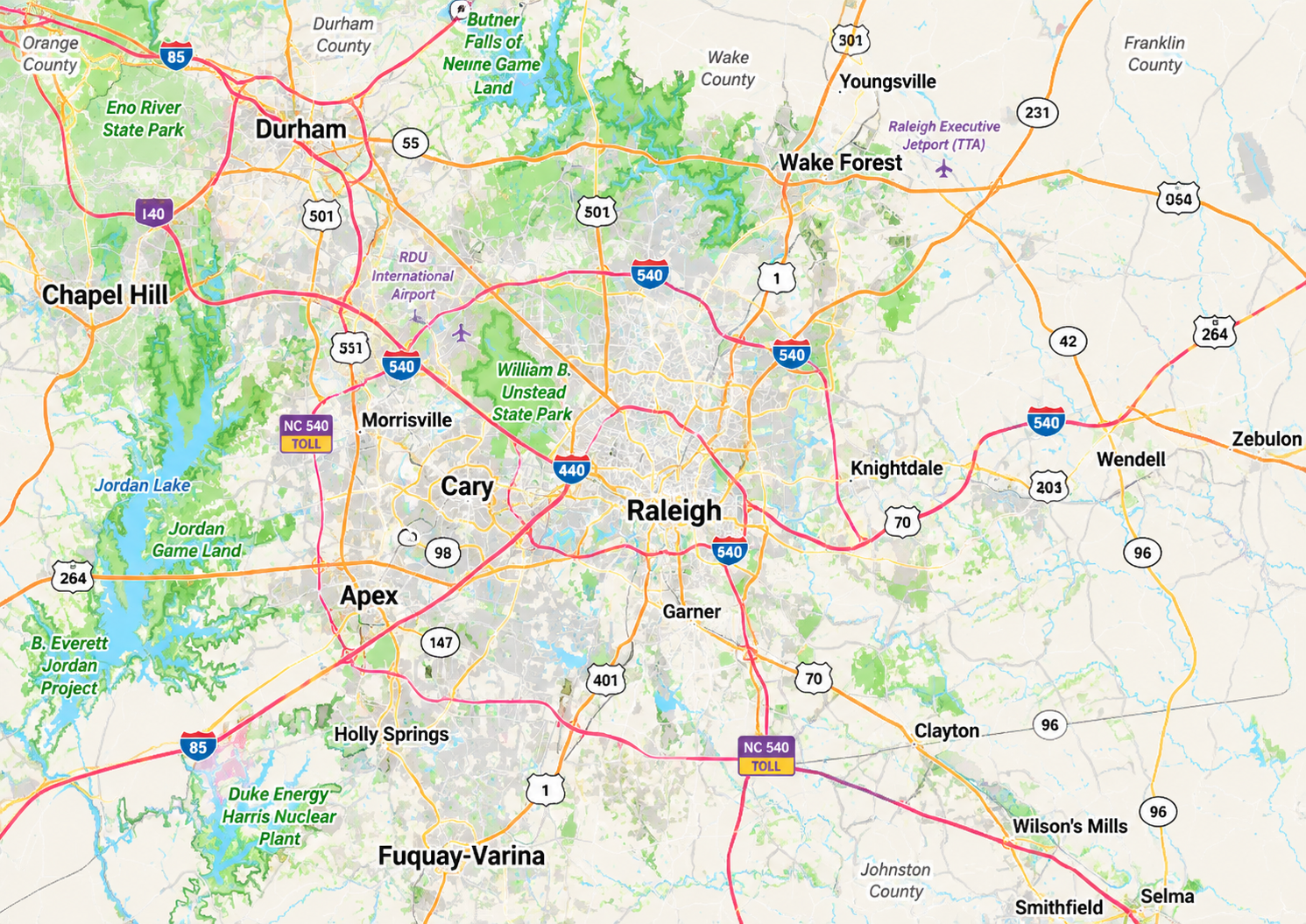
Cary
Typically among the higher-priced markets in the Triangle. Consistently high-performing public schools with many individual schools rated among the top in Wake County. Note: some high-demand schools are capped. Significant new construction along West Cary / Hwy 55 corridor; neighborhoods closer to downtown Cary tend to be more established. 15–20 min to major employers.
Families, professionals, and buyers who want a well-planned community with strong schools and a central Triangle location.
Higher price point. Mix of new construction in the west and established neighborhoods closer to the town center.
Cary Relocation Guide →Apex
Generally slightly more affordable than Cary with comparable school quality. 20–30 min to Raleigh and the Triangle. Historic downtown.
Families, buyers seeking a small-town feel with genuine character. Jordan Lake access.
Growing traffic on Highway 55. Fewer large employers directly nearby.
Apex Relocation Guide →Morrisville
Closest community to major tech employers — 5–12 min commute. More apartments and townhomes than single-family stock. Generally strong public schools.
Those who prioritize employer proximity and a denser, more urban feel.
Located very close to West Cary — often considered alongside it as an alternative.
Best Neighborhoods Near RTP →Holly Springs
A charming town adjacent to Apex and Fuquay-Varina. 25–35 min commute to Raleigh. Often offers newer homes at a lower price point than Cary. Well-regarded schools. Strong youth sports infrastructure.
Families looking for the best balance of price and quality of life.
Longer commute. Retail and dining scene still developing — improving fast.
North Raleigh
One of the higher-priced segments of the Raleigh market. Established neighborhoods with mature trees and larger lots. Close to business centers and downtown Raleigh.
Buyers who want resale over new construction. Those seeking character, larger lots, and established landscaping.
School quality varies more by specific neighborhood than in Cary or Apex. Older homes may need updating. New construction available at a higher price point.
Wake Forest
More space for the money. Great family-oriented town with strong schools. Growing retail and dining. 30+ min to downtown Raleigh.
Remote workers or buyers not tied to RTP. Those who want the most square footage and lot size for their budget.
Longest commute of these options. Best suited to those who rarely need a daily office commute.
Chapel Hill / Carrboro
School district consistently ranks among the top in North Carolina. Walkable town center. Arts scene and restaurants. City life shaped by the UNC campus — one of the country’s leading research universities. 20–30 min to RTP.
Those who appreciate a quieter university-town atmosphere, a walkable downtown, and a vibrant cultural scene. A good fit for those working in Chapel Hill, Carrboro, or Durham — commute to Raleigh and Cary will take more time.
Higher price point. The rhythm of the city is closely tied to the university — active cultural and sports life year-round.
Fuquay-Varina
Most affordable on this list. Quiet family-oriented town with plenty of new construction. Growing fast. 35–45 min to RTP and Raleigh.
Those looking for newer homes, more space, and an accessible price point.
Longest commutes. Area is growing quickly.
Priority Table
| Your Priority | Consider |
|---|---|
| Popular family communities | Apex, Holly Springs, Cary, Chapel Hill, Wake Forest, Fuquay-Varina |
| Strong public schools* | Throughout the Triangle — varies by address |
| New construction | Apex, Fuquay-Varina, Wake Forest, Durham and more → New Construction in Triangle NC |
| Short commute to major employers | Morrisville, Cary |
| Best value + decent schools | Fuquay-Varina, Wake Forest |
| Larger lots / more land | Wake Forest, Fuquay-Varina, South Raleigh |
| Established neighborhoods / mature trees | North Raleigh, Central Cary, parts of Apex |
| Walkable downtown feel | Chapel Hill, Carrboro, Downtown Raleigh |
* School district assignment depends on your exact address — not just the city name. Cary, Apex, Raleigh, Holly Springs, and Wake Forest are primarily served by Wake County Public Schools. Chapel Hill and Carrboro fall under Chapel Hill-Carrboro City Schools (Orange County), though some Apex and Chapel Hill addresses may fall in Chatham County. Durham is served by Durham Public Schools. Parts of Fuquay-Varina may cross county lines. Wake County also offers 48 magnet schools open to all county residents by application, and the Triangle has a growing number of free public charter schools available by lottery — regardless of your home address. Always verify before signing a lease or contract.
Understanding School Districts in the Triangle
Major school districts in the Triangle
- Wake County Public Schools — covers most of Raleigh, Cary, Apex, Morrisville, Holly Springs, Wake Forest, and Fuquay-Varina. The largest district in the region with 48 magnet schools and strong school choice options. Most popular among Triangle relocants.
- Chapel Hill-Carrboro City Schools (Orange County) — covers Chapel Hill and Carrboro. Consistently ranks among the top districts in NC.
- Durham Public Schools — covers Durham. Quality varies by school.
- Chatham County Schools — covers Pittsboro, Chapel Hill (some addresses), and surrounding areas.
In North Carolina, schools are assigned by county — not by city name. Two houses on the same street can be in different counties with different school districts. County lines don’t always follow city boundaries: some addresses in Apex, Cary, Holly Springs, Fuquay-Varina, and Wake Forest may fall outside Wake County — into Chatham, Harnett, or Franklin County.
Wake County offers 48 magnet schools open to all county residents by application. The Triangle has a growing number of free public charter schools available by lottery — regardless of your home address. Some high-demand schools are capped.
Always verify the county and assigned school for your specific address before signing a lease or purchase contract. Use NC School Explorer to check any address.
How Buying a Home in NC Differs From California
- Due Diligence Fee: Non-refundable, paid directly to seller at contract. Unlike CA deposit structure — money is at risk from day one.
- Speed: 30-day closes are standard. Contracts move faster than California.
- HOA communities: Far more common in NC new construction. Budget for monthly fees.
- New construction volume: Unusually high ratio of new builds to resale. Major national builders are throughout the Triangle.
New Construction in the Triangle →
Common Mistakes Californians Make When Relocating
| Mistake | Why it matters |
|---|---|
| Focusing only on home price | Total cost of living, HOA fees, and property taxes all matter. |
| Ignoring commute times | The Triangle is larger than it looks. Morrisville to Holly Springs is 30 minutes. |
| Visiting only in spring | Come back in July. If you can handle July, you’re ready. |
| Not researching school assignments | Your neighborhood school is not guaranteed. Research before you sign. |
| Assuming all Triangle suburbs feel the same | Cary and Durham are 20 minutes apart and feel like different worlds. |
| Underestimating humidity | Every Californian does. It’s not a small thing. |
| Skipping the Due Diligence process | NC home buying works differently. Understand it before you make an offer. |
Remote Workers: Which Triangle Area Works Best?
A growing share of California relocants are remote workers who no longer need to be near an employer. That opens up Wake Forest, Holly Springs, Fuquay-Varina, and North Raleigh — areas commuters often overlook.
- Home office space (dedicated room, not a corner)
- Fast, reliable internet — all major Triangle areas have fiber options
- Community and lifestyle over commute time
- Value — more house for the budget
Best Triangle Areas for Remote Workers →
Insurance: What California Transplants Should Know
Homeowners insurance: NC is significantly more insurable than coastal California. The Triangle is inland — lower hurricane risk than the coast. Check FEMA flood maps for any property you’re considering.
Auto insurance: NC rates are generally lower than California. NC uses a point system for violations — a clean driving record matters here.
Raising Kids in North Carolina vs California
The outdoor life in California is genuinely exceptional — and North Carolina won’t replace the Pacific or Yosemite. What’s different here is the everyday rhythm of family life.
- Childcare and daycare costs are significantly lower than in most California markets
- Activities, lessons, and camps — sports leagues, music, art, robotics — are more accessible and more affordable
- Yards, not balconies. Most Triangle families have outdoor space at home.
- Greenway trails run directly through neighborhoods — 100+ miles in Raleigh alone. Kids bike and walk without getting in a car.
- HOA communities with pools, playgrounds, and sports courts are common and built into the fabric of most new communities
- Local farms, pick-your-own, seasonal festivals — a genuine part of NC family culture that’s harder to find in most California suburbs
- Neighbors know each other. It’s a cultural difference that’s hard to quantify but shows up quickly.
- Mountains 2.5 hours west. Ocean 2.5 hours east. Close enough for weekends.
What parents say most often after moving: “My kids just play outside now.” It sounds simple. It isn’t.
Travel and Airport Access
- RDU: Direct flights to most major US cities
- LA: ~5 hrs · SF: ~5.5 hrs · NYC: ~2 hrs · Chicago: ~2.5 hrs
- Charlotte Douglas (CLT) 2.5 hrs away for additional international routes
What Former Californians Love — and Miss
What they love
- “I bought twice the house for half the price”
- “Traffic is real but it’s not the 405 — I have my evenings back”
- “Neighbors actually talk to each other”
- “Fall is something California just doesn’t have”
- “We’re saving money every month and I didn’t expect to feel it this fast”
- “The food scene in Durham genuinely surprised me”
- “My kids play outside. That sounds small. It’s everything.”
What they miss
- The Pacific Ocean. Nothing replaces it.
- Year-round outdoor weather. Coastal CA climate is genuinely exceptional.
- Mountains within an hour. Blue Ridge is beautiful — but it’s 2.5 hours.
- Food diversity. Triangle is growing but doesn’t match LA or Bay Area for sheer variety.
- Public transit. If you didn’t own a car in SF, you’ll need one here.
- The energy. Some people miss the ambition and pace of CA metros.
- Certain career paths tied specifically to LA or SF.
Frequently Asked Questions
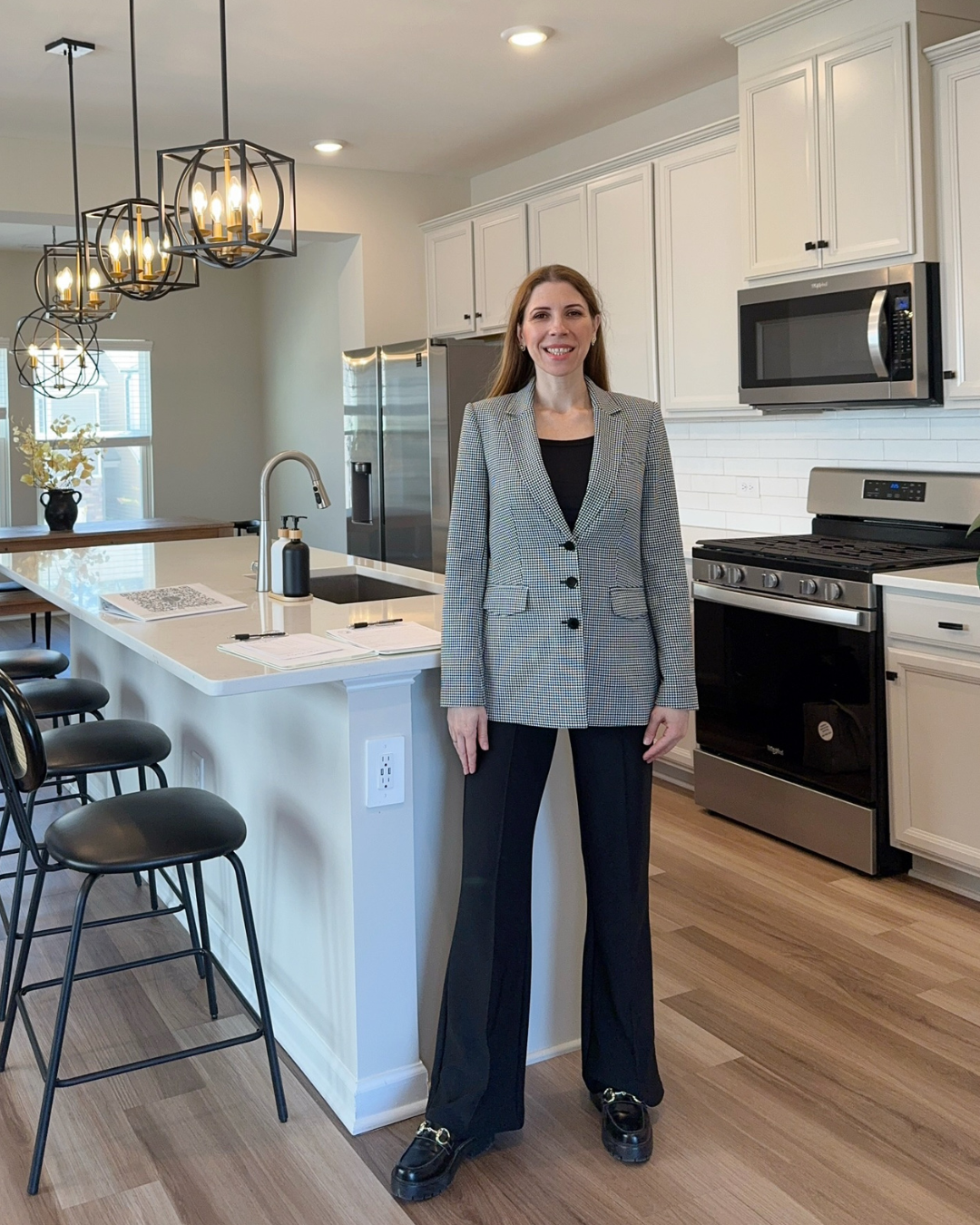
Moving from California to the Triangle?
I’ve helped California families compare Cary, Apex, Holly Springs, Morrisville, and Wake Forest — and navigate NC school assignments, builder contracts, and due diligence along the way.