
Triangle Real Estate News
Investor Buys 212 Townhomes in Wake County for $61.2 Million: What It Means for the Triangle Housing Market
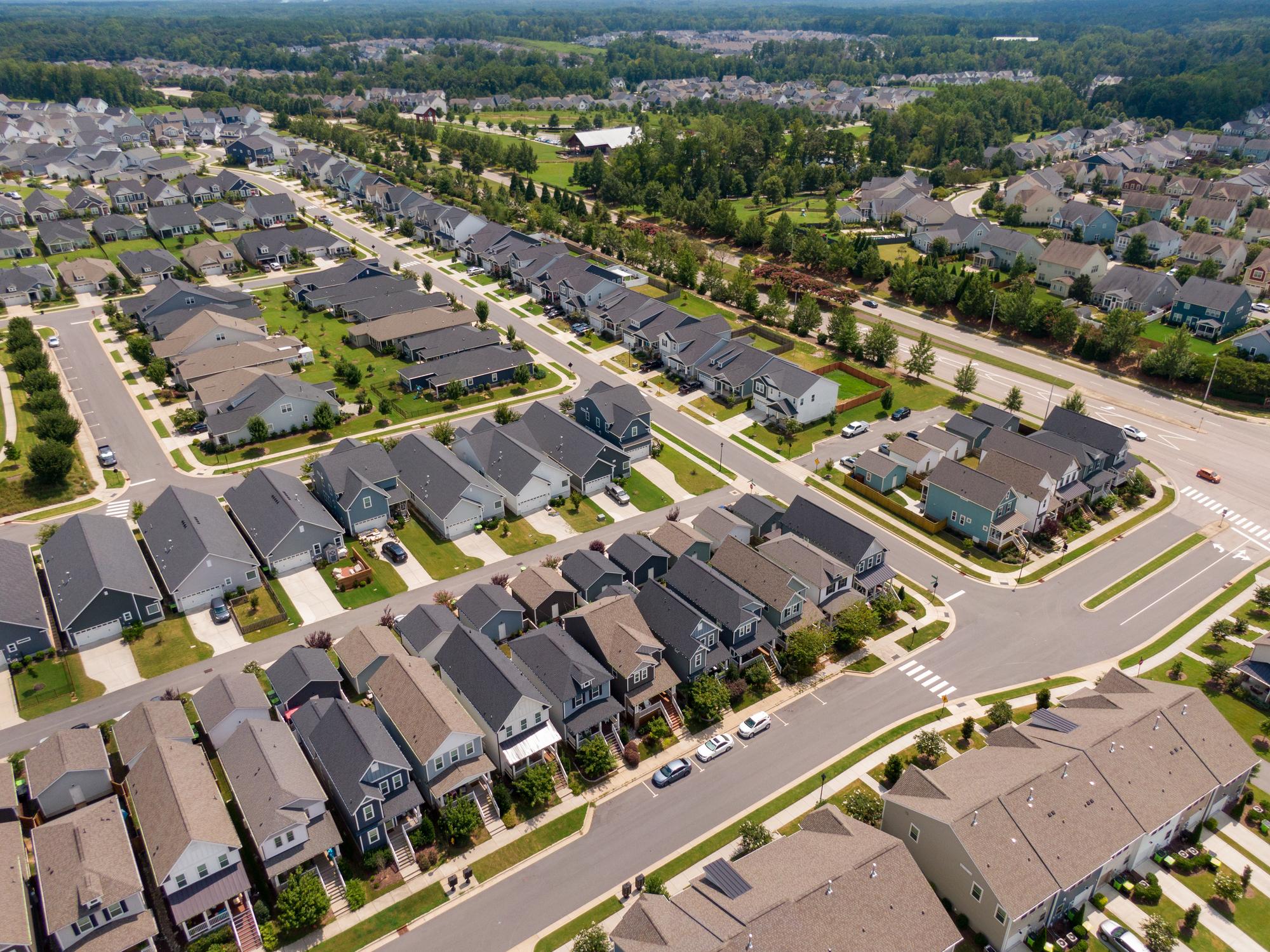
While many homebuyers are struggling with higher mortgage rates, institutional investors are making significant investments in the Triangle housing market.
In September 2026, VineBrook Homes Trust acquired 212 newly built townhomes in Knightdale and the Wake Forest area for approximately $61.2 million.
The properties will be operated as rental homes rather than sold individually to homeowners.
The transaction highlights a growing segment of residential real estate known as build-to-rent (BTR), in which homes are developed or acquired specifically for long-term rental use.
But what makes this deal particularly interesting is where the homes are located, how much the investor paid, and what it might tell us about the changing housing market in Wake County.
Where Are the 212 Townhomes Located?
The acquisition involves two residential communities in eastern and northeastern Wake County.
1. Legacy Oaks — Knightdale, NC
92 townhomes purchased for $30.25 million
VineBrook acquired 92 completed townhomes from Shenandoah Homes in the Legacy Oaks community along Hodge Road in Knightdale.
The community is expected to include 149 rental townhomes upon completion, all of which are planned to be owned by VineBrook.
According to the September 29 report, the community offers:
- Three-bedroom townhomes advertised at approximately $1,995 per month
- Four-bedroom townhomes advertised at approximately $2,045 per month
- Attached garages, in-home laundry, and modern appliances
- Planned community amenities, including a pool and clubhouse
2. Solace Row at The Point — Wake Forest / Rolesville Area
120 townhomes purchased for $30.9 million
The second acquisition includes 120 townhomes purchased from Starlight Homes in The Point subdivision, near Wake Forest and Rolesville.
These homes were originally intended to be sold to individual buyers but were instead acquired as a rental portfolio.
Three-bedroom townhomes were advertised starting at approximately $1,595 per month. The homes are approximately 1,421 square feet and include modern appliances, in-home laundry, and smart-home features.
Community amenities are expected to include a clubhouse, swimming pool, walking trails, and a park.
Rental rates and property availability reflect reported listings at the time and are subject to change.
Source: Triangle Business Journal — VineBrook Acquires More Than 200 Wake County Homes
How Much Did the Investor Pay per Home?
Based on the reported acquisition prices:
| Community | Homes | Total price | Average per home |
|---|---|---|---|
| Legacy Oaks | 92 | $30.25M | ~$329,000 |
| The Point | 120 | $30.9M | ~$258,000 |
| Total | 212 | $61.15M | ~$288,000 |
These are average acquisition prices across the portfolios, not individual home appraisals or retail listing prices.
Bulk transactions can have different pricing structures from individual home sales. They may also reflect negotiated terms, development costs, expected rental income, and other investment considerations.
Still, the transaction demonstrates the scale of capital that institutional investors are willing to commit to residential rentals in Wake County.
Why Are Institutional Investors Buying Townhomes?
Traditionally, most new townhome communities in the Triangle have been marketed to individual homeowners or smaller real estate investors.
But another approach has become increasingly visible: acquiring entire communities and operating them as professionally managed rental properties.
This strategy offers several potential advantages to large investors.
1. Demand for single-family-style rental housing
Some households prefer the space, privacy, and neighborhood amenities of a townhome but are not ready to purchase a property.
Higher mortgage payments can make renting a practical alternative, particularly for families relocating to a new area or waiting to buy.
2. Centralized property management
Owning dozens or hundreds of homes in the same community can simplify maintenance, leasing, and property management compared with owning scattered rental properties.
3. Long-term rental income
Rather than generating profit through immediate resale, build-to-rent investors typically focus on recurring rental income and long-term property performance.
However, these investments are not without risk. Vacancy, maintenance expenses, property taxes, insurance costs, financing, and future rental competition all affect profitability.
Why Knightdale and Wake Forest?
Both Knightdale and Wake Forest are part of the growing Raleigh metropolitan area and offer alternatives to some of the Triangle’s more established residential markets.
Knightdale provides access to eastern Raleigh and major transportation corridors, while Wake Forest and the surrounding Rolesville area continue to attract residential development.
For investors, these locations may offer opportunities to acquire relatively new homes at prices below those found in certain established parts of Raleigh or Cary.
But location alone does not guarantee strong returns. Rental demand, competing communities, employment access, and operating expenses remain important considerations.
What Does This Mean for Homebuyers?
One interesting detail is that the 120 townhomes at The Point were originally planned as homes for sale.
Instead, they became part of a rental community.
That illustrates how the market for new construction can change when developers evaluate different options for selling completed homes or entire portfolios.
For buyers, institutional purchases can have two different implications.
On one hand, purchasing an entire group of homes for rental use removes those specific properties from the inventory available to individual buyers.
On the other hand, bulk acquisitions can help builders sell inventory, recover capital, and move forward with other projects.
This does not necessarily mean institutional investors are driving up home prices in Knightdale or Wake Forest. The effects depend on the scale of purchases relative to local inventory, new construction activity, and buyer demand.
What Does This Mean for Small Real Estate Investors?
A $61 million institutional acquisition and the purchase of one rental townhome are very different investments.
Large investors may benefit from negotiated bulk pricing, centralized management, and access to capital that individual buyers do not have.
For someone considering purchasing a rental property in the Triangle, the more useful question is not simply whether large investors are buying.
It is whether the numbers work for a specific property.
Before purchasing an investment townhome, consider:
- Rental income: What are comparable properties actually renting for?
- Cash flow: Will rent cover the mortgage, taxes, insurance, HOA fees, management, maintenance, and vacancy?
- Rental restrictions: Does the HOA allow long-term rentals, and are there any restrictions or approval requirements?
- Competition: How many similar rental properties are available nearby?
- Exit strategy: Would the property also appeal to individual buyers if you decided to sell?
New construction can reduce some immediate maintenance concerns, but purchase price and financing terms remain critical to investment performance.
Is Build-to-Rent Changing the Triangle Housing Market?
The VineBrook transaction is not an isolated example of institutional interest in the region.
According to Triangle Business Journal, the company had also acquired the My Door at Brier Creek rental community in Raleigh earlier in 2026.
The September article also reported that the Triangle’s median townhome sales price was approximately $339,000 in August 2026, down 8% year over year, based on Doorify MLS data.
That market environment may create opportunities for investors capable of purchasing entire groups of homes.
At the same time, increasing the supply of professionally managed rental townhomes can create additional competition for individual landlords.
The long-term impact will depend on rental demand, new construction, population growth, and broader economic conditions.
One transaction alone is not enough to establish a market-wide trend, but it is an important development to watch.
The Bottom Line
The purchase of 212 townhomes for $61.2 million shows that institutional investors continue to see potential in the Triangle’s residential rental market.
It also raises an interesting question for buyers and individual investors:
If large investment companies are buying newly built townhomes to rent out, does that mean purchasing an investment property in the Triangle is a good opportunity?
Not necessarily.
The answer depends on the property’s acquisition price, financing costs, realistic rental income, ongoing expenses, and long-term investment goals.
For buyers, investors, and homeowners, understanding these transactions helps put local real estate trends into perspective.

Exploring Real Estate Investment Opportunities in the Triangle?
Whether you’re considering your first rental property, evaluating new construction, or exploring residential investment opportunities in Raleigh, Knightdale, Wake Forest, Cary, or Apex, understanding the local market is essential.
I help buyers and investors compare properties, research neighborhoods, evaluate market conditions, and explore real estate opportunities throughout the Triangle.
Contact Anna RukhlinaThis article is provided for general informational purposes and does not constitute financial, tax, or investment advice. Market conditions, rental rates, property values, and investment performance can change.