What’s My Home Worth? Home Value & Pricing Strategy Guide for Triangle Sellers
Thinking about selling your home in Raleigh, Cary, Apex, or anywhere in the Triangle?
The two questions sellers ask first are usually the same: What is my home worth? and What should I list it for? This guide answers both — and explains why the answers aren’t always identical.

What Is My Home Worth?
Your home’s value isn’t a fixed number — it’s what a buyer is willing to pay in today’s market, given current inventory, interest rates, and competition. That number can shift meaningfully from season to season and year to year.
There are two ways to find out what your home is worth: automated online tools and a professional Comparative Market Analysis. Both are useful. Only one is accurate enough to base a listing decision on.
Online Estimates: A Starting Point, Not a Strategy
Online valuation tools — Zillow’s Zestimate, Redfin Estimate, and similar automated valuation models (AVMs) — are built on public records: tax assessments, past sale prices, and square footage data. They’re useful for a ballpark sense of where your home sits in the market. They’re not a substitute for a professional valuation.
Here’s why:
| Tool | Useful For | Limitations |
|---|---|---|
| Zillow Zestimate | Quick ballpark estimate | Doesn’t account for upgrades, condition, or renovations |
| Redfin Estimate | Tracking market trends over time | Limited local context; no property inspection |
| Automated Valuation Models | Data-driven, instant | Based on public records only; no interior knowledge |
| Professional CMA | Listing price decisions | Requires agent review — most accurate method |
What Is a Comparative Market Analysis (CMA)?
A Comparative Market Analysis (CMA) is a professional estimate of a home’s market value based on recently sold properties, active listings, pending sales, and local market conditions. Real estate agents use CMAs to help sellers determine a competitive listing price. Unlike automated tools, a CMA incorporates property-specific factors — condition, upgrades, floor plan, lot characteristics — that algorithms cannot assess.
What Impacts Your Home’s Value?
These are the factors that move the needle most in Triangle markets:
Location
Even within the same zip code, proximity to employment corridors, retail, greenways, and commute routes affects demand. A street can matter.
School Assignments
Wake County school assignments have a measurable effect on buyer interest and pricing. Buyers with school-age children often filter by school district before they filter by price.
Condition
Move-in ready homes attract more buyers and stronger offers. Deferred maintenance doesn’t disappear — buyers discount for it, often more aggressively than sellers expect.
Updates and Renovations
Kitchen and bathroom updates generally return value. Not every renovation does — what you spent doesn’t always equal what the market will pay. The key question: does this renovation bring the home up to buyer expectations at your price point?
Lot Size and Outdoor Space
Larger lots, privacy, and usable outdoor space carry a premium — especially among buyers relocating from denser markets.
Floor Plan
Open, functional floor plans remain in high demand. Awkward layouts or below-average bedroom counts can limit your buyer pool regardless of square footage.
Community Amenities
HOA communities with pools, greenways, and clubhouses attract buyers who value those features and are willing to pay for them.
New Construction Competition
This is a Triangle-specific factor that resale sellers must account for. In markets like Wake Forest, Clayton, and parts of Apex, your home competes directly with new builds — often with builder incentives on closing costs and rate buydowns included. Resale pricing has to reflect that reality.
How Realtors Determine Home Value
A professional valuation draws on four data sources:
Comparable Sales (Comps)
Recently sold homes in your area with similar size, age, condition, and features. These are what buyers actually paid — not asking prices, not estimates. Comps are the foundation of any CMA.
Active Competition
What’s currently listed in your market. Buyers compare your home against everything else available at your price point. Your agent needs to know what they’ll see side by side.
Pending Sales
Homes under contract but not yet closed. They often reflect current buyer demand more accurately than comps from 90 days ago.
Market Conditions
Inventory levels, interest rates, and seasonal demand patterns all influence what buyers can and will pay at a given moment. A home priced right in April may need a different strategy in November.
Pricing Strategy: How to List Your Home
Knowing your home’s value is step one. Deciding how to list it is step two — and they’re not always the same number.
The Three Approaches
Market Value Pricing
List at or very close to what comparable sales support. This is the most common approach and the lowest-risk strategy in most conditions. It attracts qualified buyers without signaling either desperation or overconfidence.
Competitive Pricing
List slightly below the supported market value to generate early activity, strong showing volume, and — in the right conditions — competing offers. The goal isn’t to give your home away; it’s to use buyer competition to push the final price up. This works best when inventory is low and motivated buyers are actively looking.
Aspirational Pricing
List above what comps support, leaving room to negotiate down. This occasionally works for genuinely unique properties or in very low-inventory environments. More often, it results in extended days on market, eventual price reductions, and a final sale price lower than a correct initial price would have achieved.
Why Overpricing Backfires
Buyers today are well-informed. They have access to the same sold data your agent does. An overpriced home doesn’t generate leverage — it generates skepticism.
The pattern is predictable: fewer showings → accumulating days on market → price reduction → buyers wondering what’s wrong → offers that come in below where you would have ended up anyway.
When to Sell: Timing in the Triangle
Pricing and timing are connected. The same home can attract very different buyer activity depending on when it hits the market.
- Spring (March–May) is the strongest selling season in the Triangle. Buyer demand peaks, families want to be settled before the school year, and homes that are priced and presented well move quickly.
- Summer (June–August) remains active, particularly in markets with strong corporate relocation demand. Raleigh and Cary see consistent buyer activity through the summer months.
- Fall (September–November) can be a strong window — buyers who didn’t find what they wanted in spring return, and inventory often thins out, which works in sellers’ favor.
- Winter (December–February) is slower overall, but buyers who are active tend to be serious and motivated. Less seller competition can offset the lower volume.
Interest rates matter too. When rates rise, purchasing power shrinks, which compresses what buyers can offer. When rates fall, demand responds quickly. Your pricing discussion should account for where rates are — not where they were six months ago.
Triangle Market Considerations
The Triangle is not one market. Each area has its own buyer pool, inventory dynamics, and pricing norms.
Raleigh
The largest and most diverse buyer pool in the region. Demand is consistent year-round, driven by tech, healthcare, state government, and university employment. Competition among sellers can be significant in desirable neighborhoods near employment centers.
Cary
High desirability and limited resale inventory create consistently favorable conditions for sellers. Buyers in Cary often move quickly when the right home appears. New construction pressure is lower than in the outer suburbs.
Apex
One of the most in-demand towns in Wake County. Strong school reputation and neighborhood character drive sustained buyer interest. Well-priced, well-presented homes tend to sell fast.
Wake Forest
Active new construction market means resale homes compete directly with builder inventory — including incentives. Pricing strategy must account for what a buyer could get from a builder nearby.
Clayton
A price-sensitive market relative to the western suburbs. Buyers here are often highly focused on monthly payment, making current interest rates especially relevant to demand levels.
Durham
A growing market with significant neighborhood-level variation. Proximity to Duke, Research Triangle Park, and downtown drives strong demand in specific corridors; other areas require more competitive pricing.
Common Pricing Mistakes
Frequently Asked Questions
Get a Personalized Home Value Analysis
The most accurate picture of what your home is worth — and how to price it — comes from a professional review of your specific property in today’s market.
- Recent comparable sales in your neighborhood
- Analysis of your active competition
- Estimated market value range based on current data
- A recommended pricing strategy tailored to your goals
- Market timing guidance
- No pressure, no obligation
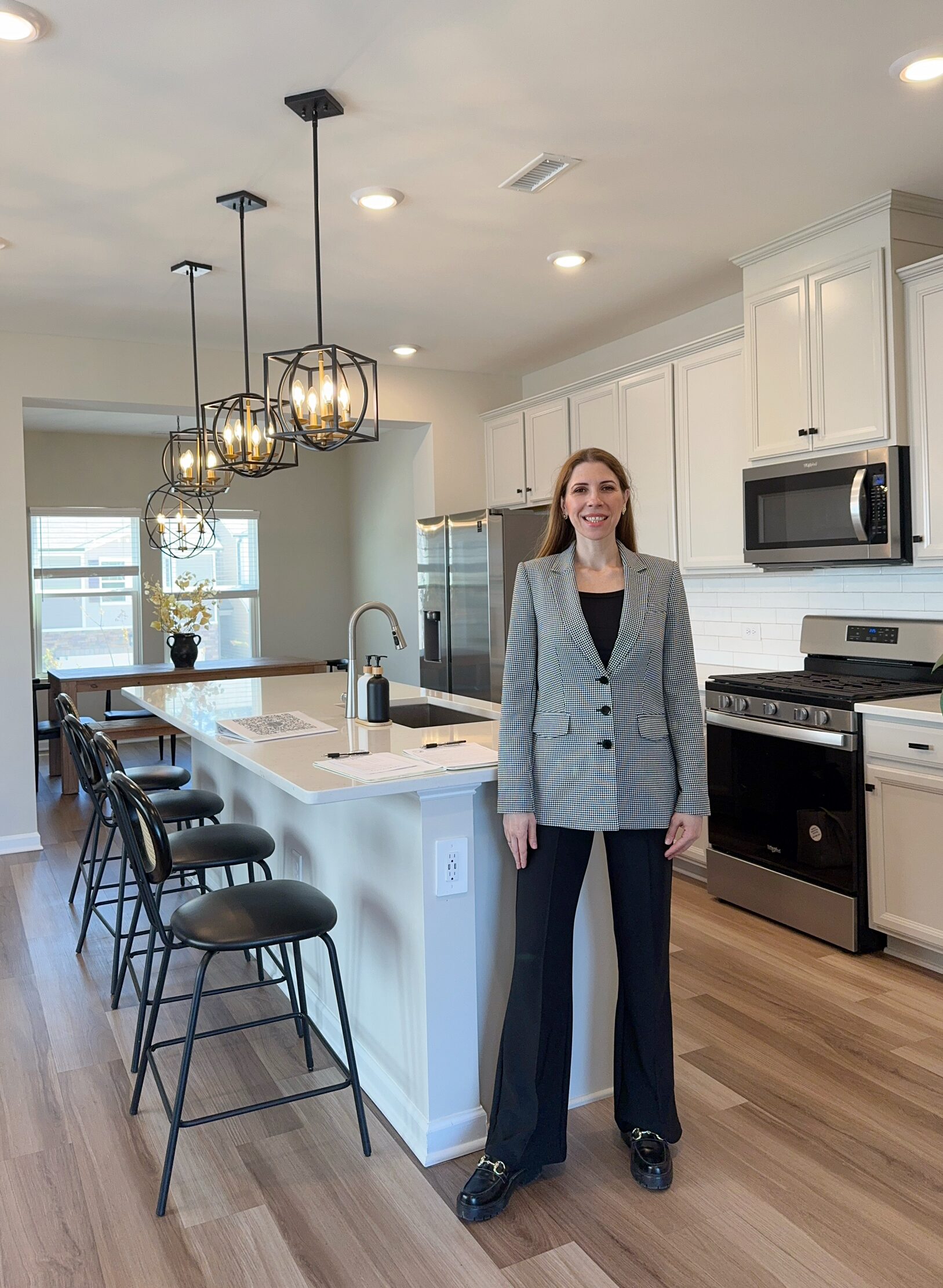
Anna Rukhlina · Real Estate Broker · DASH Carolina · 919-332-6256